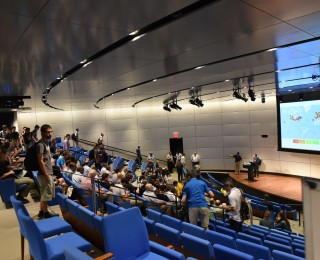
The Extreme Precision Radial Velocities Workshop
Our current best radial velocities are precise to about 1m/s. How do we make the step towards achieving 10cm/s precision?

Our current best radial velocities are precise to about 1m/s. How do we make the step towards achieving 10cm/s precision?
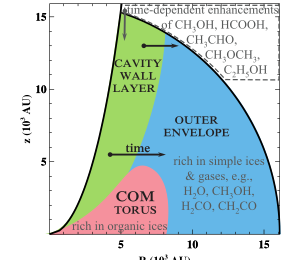
Advanced observational tools such as ALMA allow the detection of complex organic molecules – the building blocks of life. However, how and where they are formed is still unknown.
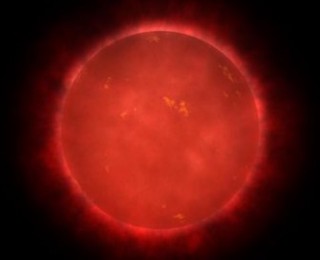
Heavy stars live like rock stars: they live fast, become big, and die young. Low mass stars, on the other hand, are more persistent, and live longer. Fusing hydrogen slow and steady wins the stellar age-race.
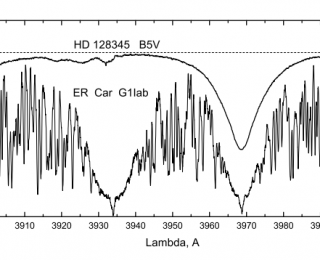
Cepheids are bright enough that we can use them to measure distances to other galaxies, but their luminosities also makes detecting their companions particularly difficult. So how do astronomers find their uncover their secret partners? Today’s paper takes a look…
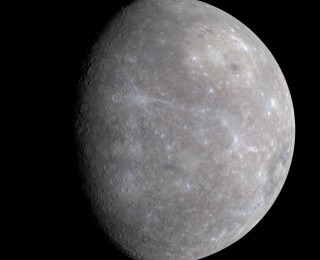
Mercury is the smallest planet in the Solar System, but some of its properties are a big challenge to explain. Today’s Astrobite presents a solution to one of these issues: The darkening of Mercury is induced by a high abundance of carbon delivered by meteorites.
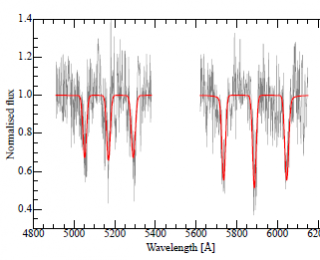
The galaxy is littered with white dwarfs, the burnt out remnants of stars that have run out of hydrogen fuel in their cores, but were too small to explode as supernovae. But far from being lifeless orbs, around a tenth of white dwarfs have powerful magnetic fields, a million times stronger than that of the Sun. How did these magnetic white dwarfs become such strong magnets? And just how many are there. The authors of this paper set out to answer the second of these questions, in the hope that it would shed light on the first.