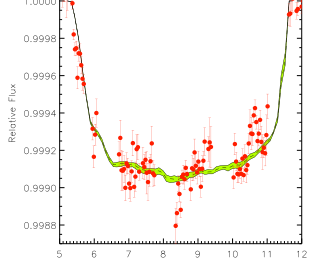
Using observations from home to improve the transit method
Most exoplanets are and have been detected by the transit method. Maybe, we can improve the method even further by drawing conclusions from the recent Venus transits in 2004 and 2012.

Most exoplanets are and have been detected by the transit method. Maybe, we can improve the method even further by drawing conclusions from the recent Venus transits in 2004 and 2012.
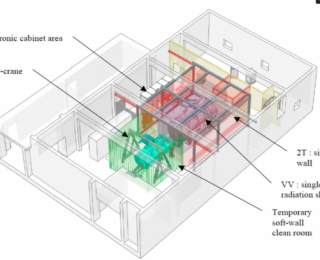
Are you on the lookout to see if there are habitable planets are out there? Or do you want to see how or if physical ‘constants’ have varied with time? Why not design a versatile instrument capable at tackling a wealth of outstanding questions in astronomy: a sort of a “scientific pandora’s box” for extremely high precision astronomical research? This is where ESPRESSO comes in…
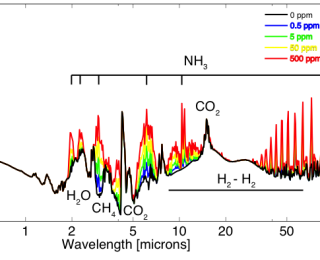
We have one canonical idea of what life looks like on Earth: nitrogen, water, carbon dioxide. But would this be true on another world? When looking for life in the atmospheres of exoplanets, we might want to consider searching for something completely different.
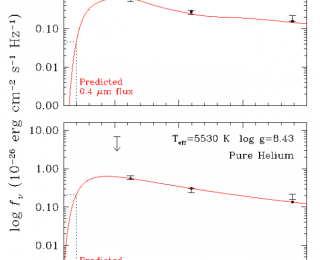
Over the past decade the study of planetary debris at white dwarfs has become an increasingly exciting area. Observations of this debris have allowed us to make unique discoveries about the chemical composition of extrasolar rocky planets, as well as revealing the endpoints of the evolution of planetary systems very similar to our own…
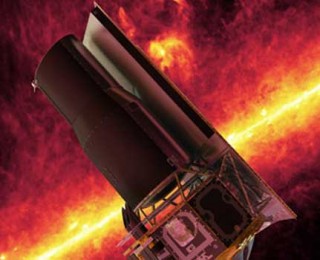
Ten years after launch, financial problems may mean the demise of the Spitzer space telescope. Today, we review its history and discuss its possible future.
Most binary stars probably formed at the same time, meaning all stars in the same system should have the same age. The authors of this paper analyze a stellar binary system where one star appears to be lying about its age, as one star appears 3 billion years older than its companion.