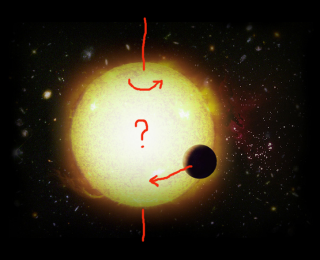
Flipping Orbits
How do so many hot jupiters come to orbit backwards?

How do so many hot jupiters come to orbit backwards?

Graduate student Meredith Rawls tells us about the AAS Ambassadors program and her experience as part of the inaugural class of Astronomy Ambassadors. The application deadline for this year’s class is coming up on Oct. 18th.
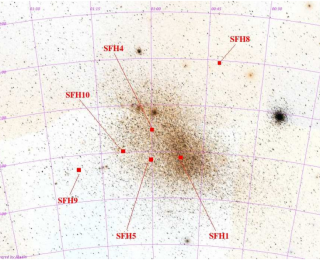
The authors of today’s paper find out just what kind of star formation history lies in the Milky Way’s next meal: The Small Magellanic Cloud. After all, they say you are what you eat.
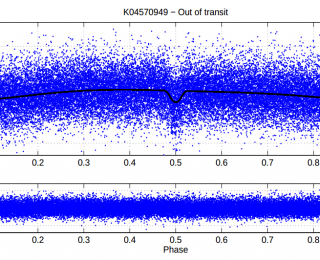
Faigler et al. apply their BEER algorithm to a collection of stars in the Kepler field and find a hot Jupiter missed by the Kepler Science Team, showing a new way to find and characterize planets without follow-up observations.
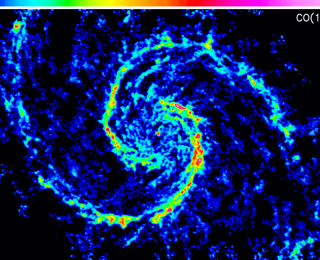
It’s big, it’s active, and it’s only 20 million lightyears away– it is the Whirlpool galaxy, and astronomers are getting a brand new view. Using the Plateau de Bure interferometer, this paper examines the gas in this nearby grand-design spiral galaxy on arcsecond scales, resolving for the first time its individual molecular clouds. What does this tell us about star formation in this galaxy? Stay tuned!
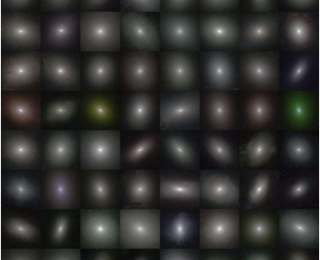
Huang et al. dig up evidence that distant “red nugget” galaxies grew into the massive ellipticals we see today by consuming smaller, gas-poor galaxies.