by Caroline Huang | Apr 13, 2015 | Daily Paper Summaries
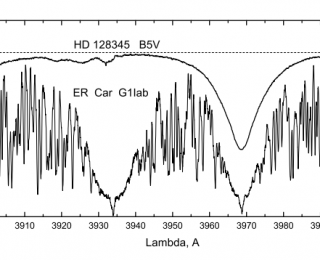
Cepheids are bright enough that we can use them to measure distances to other galaxies, but their luminosities also makes detecting their companions particularly difficult. So how do astronomers find their uncover their secret partners? Today’s paper takes a look…
by Michael Zevin | Mar 11, 2015 | Daily Paper Summaries
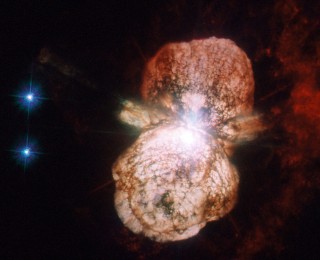
The massive binary star system Eta Carinae has been examined like never before in a recent study. Read on to hear the new discoveries from this approach, and the potential it opens for astrophysical research.
by Jesse Feddersen | Mar 10, 2015 | Daily Paper Summaries
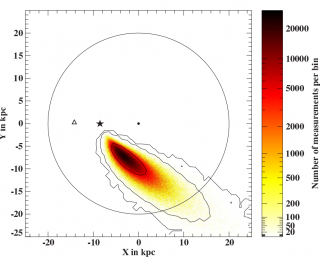
A star on its way out of the Milky Way has set a new speed record. What’s the rush? Read on to find out…
by Jesse Feddersen | Dec 8, 2014 | Daily Paper Summaries
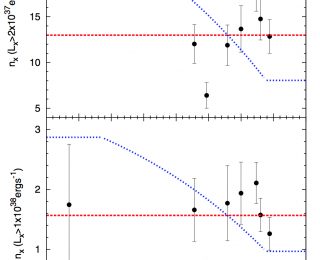
Sometimes stellar remnants cannibalize other stars, emitting x-rays that can be detected in distant galaxies. Learn how making a careful tally of these gruesome events can reveal how stars are formed.
by Korey Haynes | Sep 12, 2014 | Daily Paper Summaries
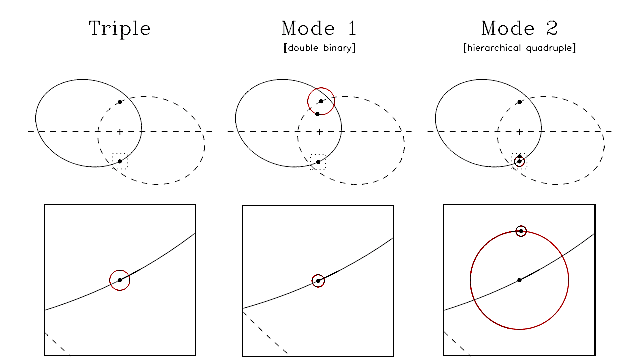
KIC 2856960 appeared to be an interesting but straightforward triple star system in the Kepler catalog. But attempts to model this system prove that appearances can be deceiving.
by Meredith Rawls | Aug 27, 2014 | Daily Paper Summaries
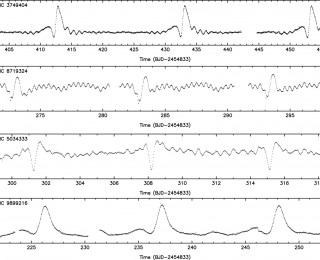
Instead of happily orbiting in circles with constant velocity, the two stars spend most of their time far apart, and a few harrowing hours racing past each other. Or, to put it another way: hours and hours of boredom punctuated by moments of sheer terror. This is a heartbeat star.
