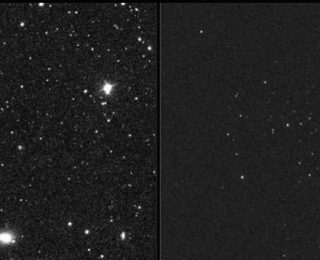
Seeing Double: Binary stars in dwarf galaxies
Two (stars) aren’t always better than one, especially when you’re trying to track down dark matter in tiny galaxies.

Two (stars) aren’t always better than one, especially when you’re trying to track down dark matter in tiny galaxies.
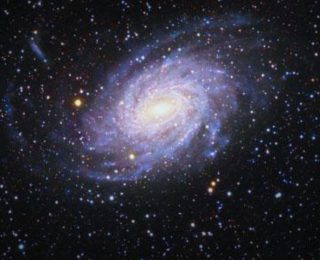
The unique nature of the newly discovered dwarf galaxy Ant 2 may have exciting implications for our understanding of dark matter and galaxy formation.

How can the orbits of satellite galaxies be used to pin down the mass of the Milky Way?
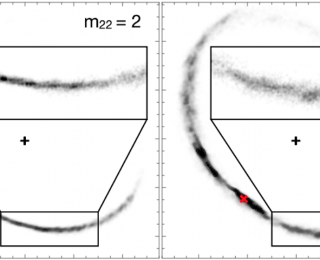
Stellar streams are an excellent tool for probing the nature of Dark Matter. Today’s paper tests whether Fuzzy Dark Matter is a viable theory by evaluating the thinness of streams in the Milky Way.
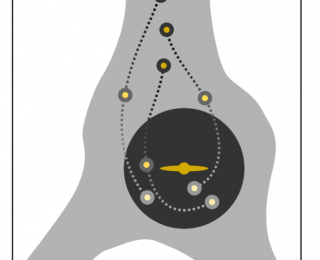
Many satellite galaxies in the local universe are orbiting their parent galaxies in highly coherent planes—yet such structures are vanishingly rare in simulations. What gives?

Can dark matter annihilation explain multi-wavelength observations of Andromeda’s galactic center?