Detonating white dwarfs with black holes
Dark matter, in the form of primordial black holes, can potentially trigger Type Ia supernovae in white dwarfs.

Dark matter, in the form of primordial black holes, can potentially trigger Type Ia supernovae in white dwarfs.
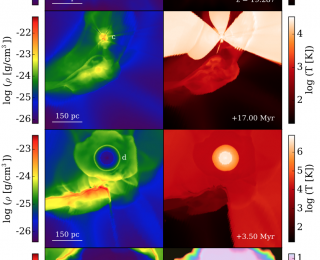
Stars formed in the early Universe were extremely massive and extremely low in elements heavier than helium. The transition from the first to the second generation of stars is still hidden in the shadows of the past. However, simulations of the most massive supernovae can help us to decipher the way of how the life cycle of stars came into being.
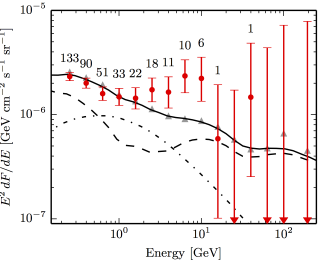
If dark matter particles can collide to release gamma-rays, the best place to see them will be in the centers of dwarf galaxies. Archival Fermi-LAT images around Reticulum 2 show the first ever detection of gamma-rays from a dwarf galaxy. Dark matter detection may be close at hand!
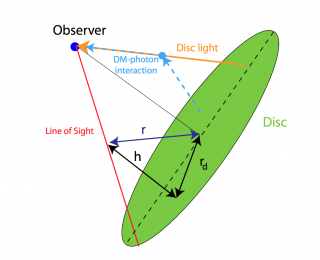
How do you get a glimpse of dark matter? Stare really hard at the outskirts of galaxies and hope the matter isn’t totally dark.

Dark matter, neutron stars, black holes, and an extremely exotic explanation for Fast Radio Bursts.
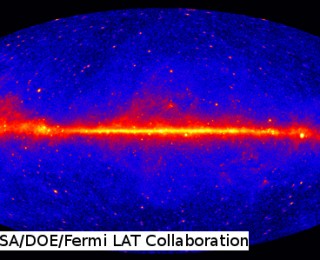
For a few years now, excess emission of gamma-rays in the direction of the Galactic Center has puzzled scientists. In the paper we discuss today, the authors re-analyze data from the Fermi telescope to get new insights into the origin of this excess emission. They make the case for the signal being described by dark matter particles annihilating in the center of our Galaxy.