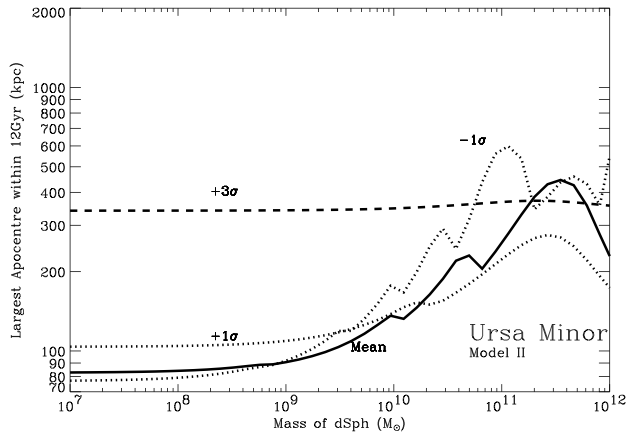
Where did the Milky Way Dwarfs come from?
Turning back the clock to study our host galaxy’s companions. Where did they come from?

Turning back the clock to study our host galaxy’s companions. Where did they come from?
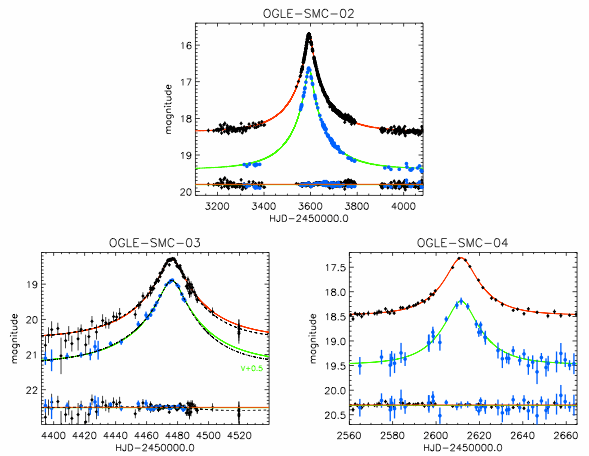
In previous astrobites posts, we’ve talked about using microlensing to find planets and to detect dark matter in other galaxies. However, one of the earliest applications of microlensing was a bit closer to home: the detection of compact objects in the dark matter halo of our own galaxy. We know there is a lot more mass in galaxies, including our own, than what we can see. Dark matter comprises more than 80% of the matter in our Universe, but what is it really comprised of?
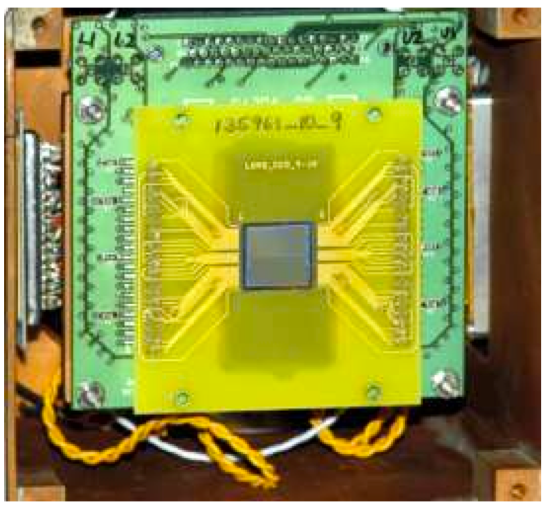
Charge Coupled Devices (CCDs) are workhorses of observational astronomy. These chips are commonly used as imaging detectors in telescopes, but they have wide applications from spectroscopy to drug discovery. This paper presents read-out results from Skipper CCDs recently developed at Berkeley Labs which feature low readout noise.
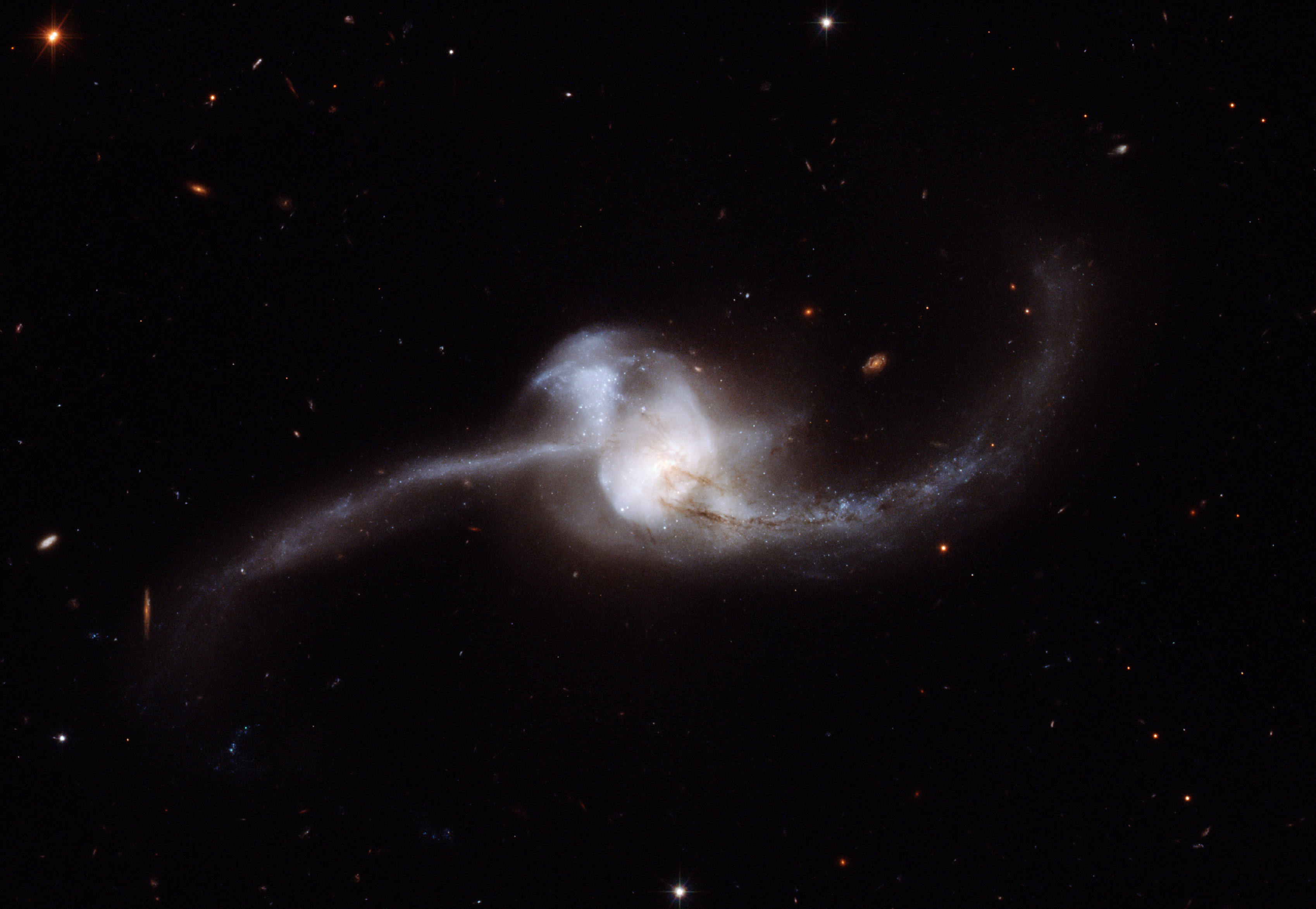
Wouldn’t it be cool is the super-massive black hole at the center of a huge galaxy was somehow related to the entire dark matter halo surrounding the system? Turns out it just might be.

Astronomers find evidence for dark matter using the universe as their laboratory. How can we try to detect these particles on Earth?
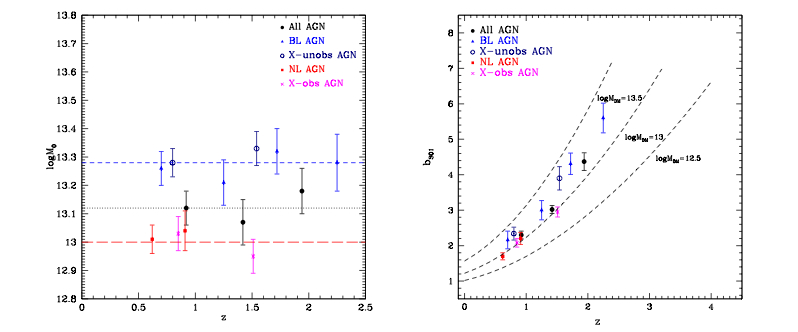
Using measurements of the projected correlation function, Allevato et al. study the evolution of X-ray selected, active galactic nuclei (AGN) in order to help understand how these massive, central black holes are triggered and where they fit in a larger cosmological framework.