by Jesse Feddersen | Aug 19, 2015 | Daily Paper Summaries
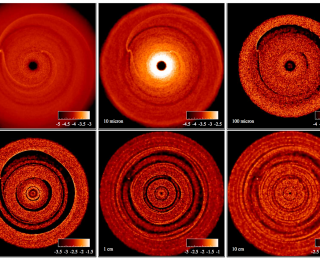
Last year, an image was released that took our breath away. Exquisite rings carved in a disk of material around a nearby star. Now, astronomers want to know if forming planets are responsible, and why the image might look different from the cartoon in your textbook.
by Ben Cook | May 13, 2015 | Daily Paper Summaries
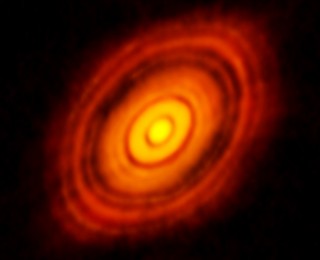
The authors of today’s paper show that the locations of the protoplanetary gaps in HL Tau are to be expected from the condensation points of common ices in the disk.
by Jesse Feddersen | Apr 6, 2015 | Daily Paper Summaries
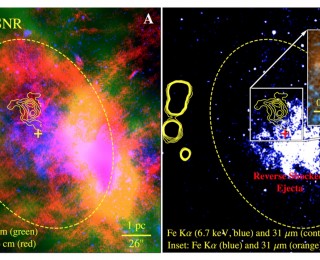
Observations of dust near the remains of a supernova in the center of our galaxy could have implications for dust production in the earliest galaxies.
by Jaime Green | Jul 16, 2014 | Daily Paper Summaries
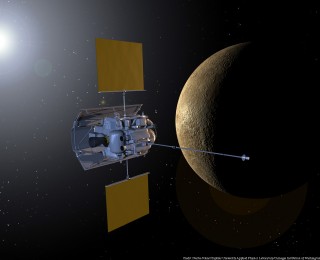
A new model explains Mercury’s major density with magnetism.
by Jaime Green | Mar 26, 2014 | Daily Paper Summaries
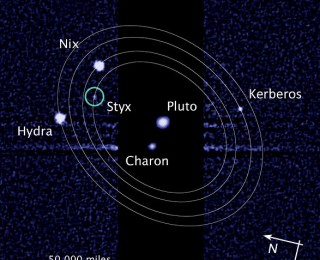
Pluto’s small satellites have very low escape velocities, which means that dust kicked up by impacts has a relatively easy time of escaping rather than settling back down to the little moon’s surface. Today’s paper looks at the fates of that dust.
by Elisa Chisari | Sep 18, 2013 | Daily Paper Summaries
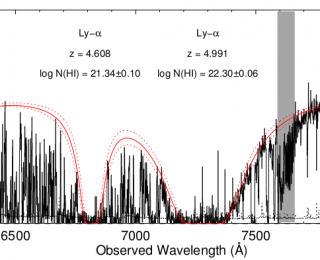
Gamma-ray bursts are the most energetic explosions in the Universe. Today, we discuss how to use one GRB as a beacon to study the properties of a high redshift galaxy, the composition of the gas in the intergalactic medium at high redshift and the formation of dust in the Universe.
