
by Jamie Wilson | Aug 27, 2019 | Daily Paper Summaries
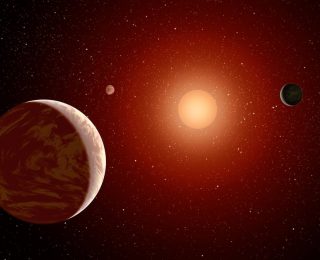
New research by astronomers at Cornell’s Carl Sagan Institute uncovers a novel way to search for the existence of life in the Universe. Flares from red dwarf stars, commonly believed to pose serious problems for habitability, might actually expose hidden biospheres through the process of biofluorescence.
by Guest | Aug 20, 2019 | Course Assignments, Daily Paper Summaries
We know UV radiation isn’t good for us, but can it hold back all forms of life?
by Briley Lewis | Jul 26, 2019 | Daily Paper Summaries
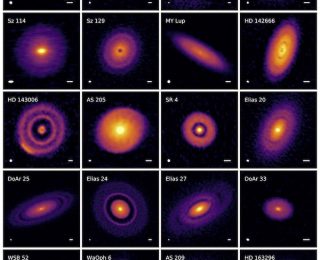
To understand planet formation, we need to observe newborn planets that are in their earlier stages of development. This is exactly what was discovered around PDS 70 – the first young, forming planet around a protostar of this age. Read more to learn about what we saw, and how we got that data!
by Vatsal Panwar | Jul 22, 2019 | Daily Paper Summaries
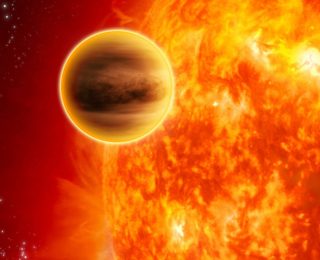
Hot Jupiters are eponymously hot from outside. How does this heat affect their atmospheres and deep interiors?

by Briley Lewis | May 10, 2019 | Daily Paper Summaries
Finding an exoplanet ocean may seem like science fiction, but it’s more plausible than you might think!
by Avery Schiff | Apr 25, 2019 | Daily Paper Summaries
Nothing is easy when you have two stars instead of one. Under the right circumstances, it can be especially hard to hold on to your atmosphere.
