• RSS
  • Submit a Guest Post
  • Undergraduates: Submit your Research!
  • Suggest a Paper Topic!
astrobites
  • About
    • About Astrobites
    • Meet the Authors
    • Statement of Inclusivity
    • Copyright & Permissions
  • Latest Research
    • Daily Paper Summaries
    • Classics
    • Undergrad Research
    • Physical Review Coverage
  • Beyond astro-ph
    • Beyond astro-ph Library
    • Interviews
    • Career Navigation
    • Personal Experiences
    • Current Events
    • Teaching with Astrobites
  • Guides
    • EM Spectrum
    • Galaxies & AGNs
    • Spectroscopy and Spectral Lines
    • Adaptive Optics
    • Gravitational Waves
    • Transient Astronomy
    • Astrophysical Software
    • Graduate School
    • Writing a personal statement for grad apps
    • First Observing Run
    • …More Guides!
Select Page
The Nobel-Winning Discovery of 51 Pegasi b

The Nobel-Winning Discovery of 51 Pegasi b

by Briley Lewis | Oct 16, 2019 | Classics, Current Events, Daily Paper Summaries

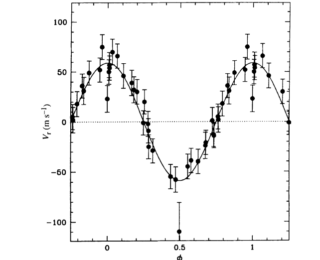
Last week, the Nobel Prize was awarded for the discovery of the first exoplanet found around a sun-like star. Come learn about how they did it, and why this was such a big deal!

Twinkle, Twinkle, Little Resonant Planetary System

Twinkle, Twinkle, Little Resonant Planetary System

by Kate Storey-Fisher | Oct 3, 2019 | Daily Paper Summaries

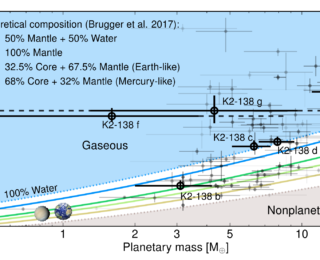
The planetary system around the K2-138 star is the longest known 3:2 resonant chain. New radial velocity measurements reveal the properties of these rhythmic planets.
Extreme Solar Systems IV

Extreme Solar Systems IV

by Samuel Factor | Sep 27, 2019 | Current Events, Personal Experiences

In mid August 600 astronomers met in Reykjavik, Iceland Extreme Solar Systems IV.
A New Technique for Finding Newly Formed Exoplanets

A New Technique for Finding Newly Formed Exoplanets

by Jessica Roberts | Sep 17, 2019 | Daily Paper Summaries

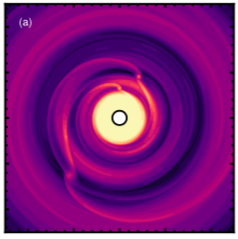
We have found thousands of fully-formed planets, but how do we go about finding those that are hiding in their disks?
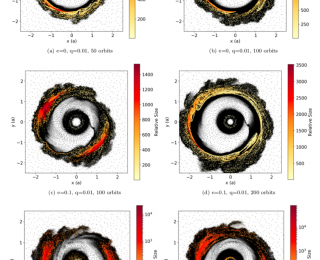
Dust Accretion & Double Suns

Dust Accretion & Double Suns

by Lauren Sgro | Sep 9, 2019 | Daily Paper Summaries

Exoplanets have been the proverbial apples of astronomers’ eyes for some time now. But what about planets that orbit not one star, but two? Read today’s astrobite to learn more about where and how such planets form!
Let’s Not Make Assumptions: UV Radiation Won’t Stop Exoplanets from Becoming Habitable

Let’s Not Make Assumptions: UV Radiation Won’t Stop Exoplanets from Becoming Habitable

by Guest | Aug 20, 2019 | Course Assignments, Daily Paper Summaries

We know UV radiation isn’t good for us, but can it hold back all forms of life?

« Older Entries
Next Entries »

Loading

Follow our socials

  • Bluesky
  • Facebook
  • Instagram
  • RSS Feed

More Posts About

AAS AGN astronomy astrophysics binary stars black holes cosmology dark matter dwarf galaxies exoplanets galaxies galaxy evolution gravitational waves habitability JWST Kepler Milky Way observations planetary science planet formation protoplanetary disks radio astronomy simulations solar system spectroscopy star formation stars stellar evolution supernovae theory

Posts by Category

  • Accessibility
  • Applications
  • Beyond
  • Book Reviews
  • Career Navigation
  • Classics
  • Climate Change
  • Course Assignments
  • Crossposts
  • Current Events
  • Daily Paper Summaries
  • Game Reviews
  • Guides
  • Historical Astronomy
  • Instrumentation
  • Interviews
  • Outreach
  • Personal Experiences
  • PRJ
  • Quick Notes
  • Satellites
  • Teaching
  • Undergraduate Research

More Astronomy

  • AAS
  • AAS Nova
  • astro-ph
  • AstroBetter
  • APOD

Read Astrobites in Other Languages

  • Astrobitos (Spanish)
  • Astropontos (Portuguese)
  • staryab (Farsi)

Listen to Astrobites

  • astro[sound]bites

Discover More Incredible Science

  • ScienceBites Network
  • RSS

© 2026 Astrobites | All Rights Reserved | Supported by AAS | Designed by Elegant Themes | Powered by WordPress