by Allison Strom | Apr 13, 2013 | Daily Paper Summaries
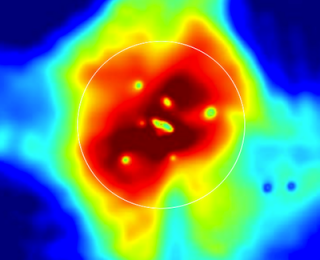
Moving mesh code AREPO looks like it will help astronomers understand the physics of galaxy formation and evolution better than its predecessors, due to an innovative new method of solving the fluid dynamics equations in astrophysical settings. This paper discusses the differences between AREPO and another code called GADGET in the case of gas accretion onto galaxies.
by Lucia Morganti | Apr 12, 2013 | Daily Paper Summaries
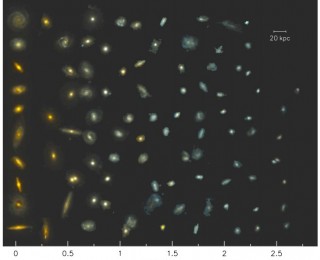
The central question of this Letter is how and when the Milky Way assembled its stellar mass. This issue is addressed by tracing the formation history of spiral galaxies which closely resemble the Milky Way.
by Anna Rosen | Apr 3, 2013 | Daily Paper Summaries
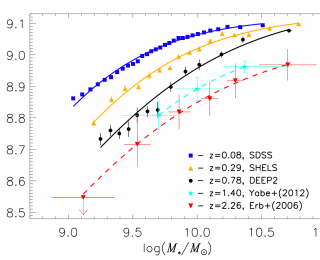
In this article, the authors measure the stellar mass-metallicity relation for star forming galaxies ranging to z~2.3. They find that mass-metallicity relationship for these galaxies evolves with time and also that it flattens at late times.
by Betsy Mills | Feb 20, 2013 | Daily Paper Summaries
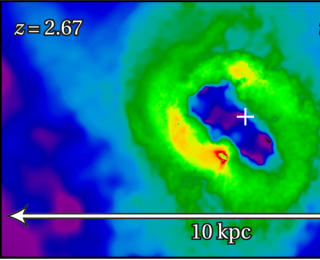
What were astronomers reading and talking about in their research last year? Check out figures from the top 12 most-cited astronomy papers from 2012 (so far) and find out what researchers were up to and why!
by Allison Strom | Feb 16, 2013 | Daily Paper Summaries
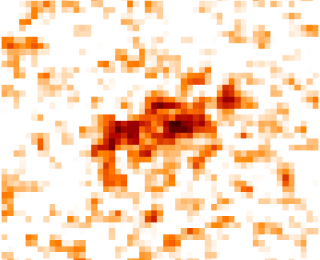
A team of astronomers working on the 3D-HST survey make use of the Hubble Space Telescope’s grism to observe star formation as a function of radius in a large sample of galaxies at intermediate redshift.
by Nick Hand | Dec 23, 2012 | Daily Paper Summaries
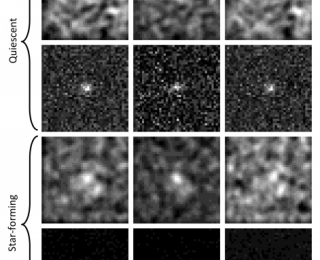
The authors investigate the fraction of massive galaxies at z ~ 2 that contains an Active Galactic Nucleus (AGN), in hopes of understanding the importance of AGN in quenching star formation.
