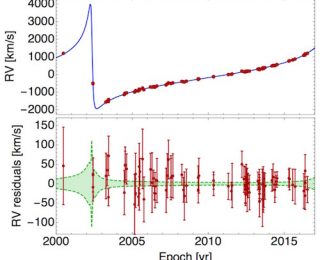
Is S0-2 a Binary Star?
When it zips past the Galactic Center black hole in 2018, how would a possible binarity of the star S0-2 affect the detectability of its relativistic motion?

When it zips past the Galactic Center black hole in 2018, how would a possible binarity of the star S0-2 affect the detectability of its relativistic motion?
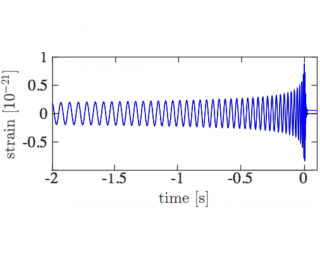
Now that gravitational waves have been directly detected, we can begin to use binary black hole mergers to probe strange consequences of strong-field general relativity. Today’s post examines the prospect of detecting an effect called gravitational-wave memory, and considers its potential for helping you get in shape for summer.
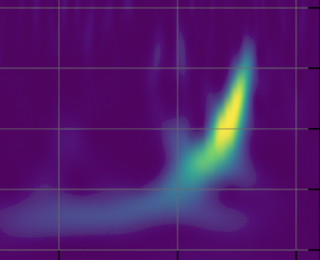
A century after Einstein’s prediction of gravitational waves, LIGO has observed these minuscule ripples in the fabric of spacetime. A new window to the Universe has opened.
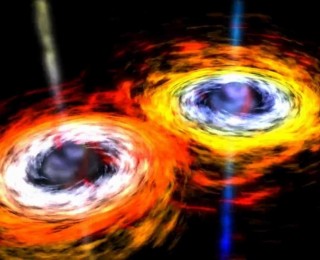
Today’s astrobite is not about disc jockey insects informing us about spacetime. Read on to find out a novel way of detecting electromagnetic counterparts of merging supermassive black holes.
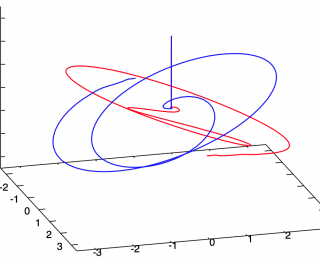
Imagine a spinning skater. She pulls her arms in a little and spins faster. She brings her arms all the way into her chest, and spins really fast, and then bam! she rockets up into the sky. Seven years ago, computer simulations revealed a configuration of two spinning black holes that merged in this way, jumping out of their orbital plane with a velocity of several thousand km/s. Not only is this weird, it’s also important. We know that large galaxies host supermassive black holes at their centers. We also know that galaxies merge, presumably introducing their black holes to one another. If the newly formed black hole were to exit the galaxy entirely, it could carry its accretion disk with it, and be observable as a displaced core.
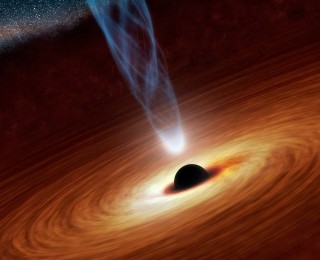
Stephen Hawking proposes that black holes may not have definite event horizons, meaning they’re really more like “gray” holes.