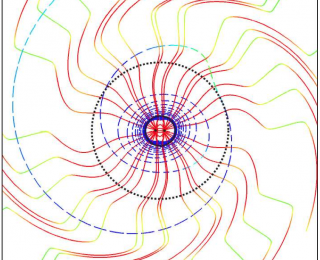
by Brett Deaton | Nov 20, 2013 | Daily Paper Summaries
Field lines are a powerful tool for building intuition for a complex geometric object.
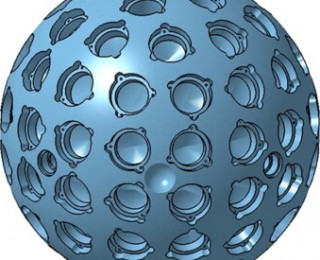
by Justin Vasel | Jun 2, 2013 | Daily Paper Summaries
Frame Dragging is a phenomenon predicted by General Relativity, but its effects have been difficult to measure. A small, round satellite called LARES aims to change that.
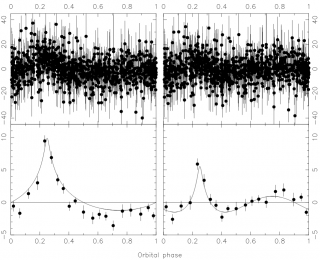
by Josh Fuchs | May 16, 2013 | Daily Paper Summaries
Shapiro time delays are one of the four tests of general relativity possible in the solar system. Astronomers can use these timing delays to measure properties of binary pulsar systems.
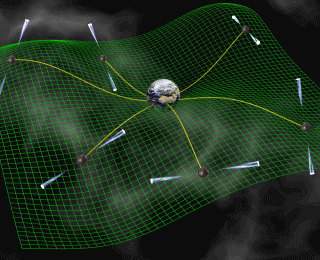
by Chris Faesi | Nov 23, 2012 | Daily Paper Summaries
The race to be the first to detect gravitational waves is on – are pulsar timing arrays on the verge of a discovery? New predictions based on revised galaxy merger calculations suggest that it may be so.
by Alice Olmstead | Jul 4, 2012 | Daily Paper Summaries
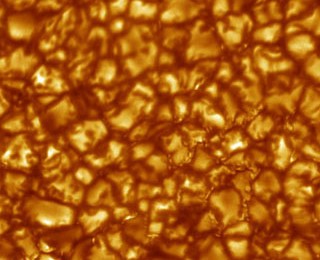
One prediction of General Relativity is that because of the way that gravity affects time, the frequency of electromagnetic radiation (light) emitted at the solar surface should decrease as it escapes the Sun’s gravitational potential well, i.e., the solar spectrum should appear gravitationally redshifted. Surprisingly, according to this recent paper by Takeda and Ueno, that prediction had yet to be definitively verified…until now.
by Adele Plunkett | Dec 9, 2011 | Daily Paper Summaries
Paper title: Verifying the no-hair property of massive compact objects with intermediate-mass-ratio inspirals in advanced gravitational-wave detectors Authors: Carl L. Rodriguez, Ilya Mandel, Jonathan R. Gair First Author’s Affiliation: Center for Interdisciplinary Exploration and Research in Astrophysics (CIERA) & Dept. of Physics and Astronomy, Northwestern UniversityThese authors propose that advanced gravitational wave detectors will be able to directly detect the coalescence of compact objects, such as neutron stars (NS) and black holes (BH). The gravitational waves resulting when a neutron star or stellar-mass black hole inspirals into an intermediate-mass black hole give interesting information about gravitational physics (go here to watch cool videos of BHs colliding). The goal is to directly test general relativity (a review paper is found here).A significant advance in this field comes from the next generation of detectors and experiments. Two such observatories are Advanced LIGO (Laser Interferometer Gravitational-wave Observatory, a project with two interferometers in Washington and one in Louisiana) and Virgo (near Pisa, Italy). Advanced LIGO should achieve sufficient sensitivity by 2015 to detect compact binaries as they interact and coalesce. This paper specifically develops the technique to detect high-mass systems with a total mass in the range of 25 to 100 solar masses, where one component is greater than one solar mass and the other less than 99 solar masses. The systems in this study are called Intermediate-mass-ratio inspirals (IMRIs) because the mass ratios between the two objects (the more massive object at the center and the object spiraling inward) are between 10:1 and 100:1.Do objects like this really exist? Observational and theoretical models suggest the presence of intermediate-mass black holes (IMBHs)...
