• RSS
  • Submit a Guest Post
  • Undergraduates: Submit your Research!
  • Suggest a Paper Topic!
astrobites
  • About
    • About Astrobites
    • Meet the Authors
    • Statement of Inclusivity
    • Copyright & Permissions
  • Latest Research
    • Daily Paper Summaries
    • Classics
    • Undergrad Research
    • Physical Review Coverage
  • Beyond astro-ph
    • Beyond astro-ph Library
    • Interviews
    • Career Navigation
    • Personal Experiences
    • Current Events
    • Teaching with Astrobites
  • Guides
    • EM Spectrum
    • Galaxies & AGNs
    • Spectroscopy and Spectral Lines
    • Adaptive Optics
    • Gravitational Waves
    • Transient Astronomy
    • Astrophysical Software
    • Graduate School
    • Writing a personal statement for grad apps
    • First Observing Run
    • …More Guides!
Select Page
Have You Ever Wanted to Generate You Own Gravitational Waves? Now You Can!

Have You Ever Wanted to Generate You Own Gravitational Waves? Now You Can!

by Haley Wahl | Aug 6, 2019 | Undergraduate Research

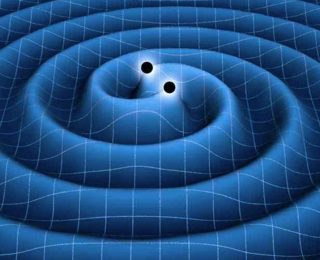
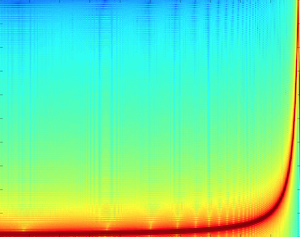
Gravitational wave simulations may take supercomputers days to perform, but two undergraduates and their advisor have created a website that allows you to do them in seconds right from your laptop!
In the heart of a trainwreck galaxy: potential for future gravitational waves

In the heart of a trainwreck galaxy: potential for future gravitational waves

by John Weaver | Jul 17, 2019 | Daily Paper Summaries

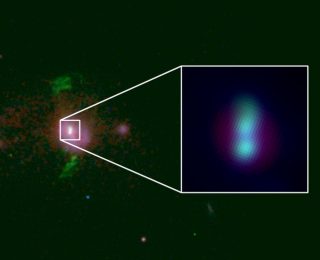
Could a suspicious pair of active black holes improve the outlook for seeing the gravitational wave background?
Meet the AAS Keynote Speakers: Professor Yacine Ali-Haïmoud

Meet the AAS Keynote Speakers: Professor Yacine Ali-Haïmoud

by Kate Storey-Fisher | Jun 7, 2019 | Career Navigation, Current Events

Professor Yacine Ali-Haïmoud studies the theory behind our astrophysical observations, from primordial black holes to organic compounds in the interstellar medium. Learn more at his keynote at #AAS234.

STROOPWAFEL: An astrophysical algorithm, not a Dutch cookie

by Bryanne McDonough | May 8, 2019 | Daily Paper Summaries

A new algorithm for improving simulations of binary star systems may lead to better understanding of gravitational waves.
Distances in the Dark: Using Binary Black Holes to Study the Universe’s Expansion

Distances in the Dark: Using Binary Black Holes to Study the Universe’s Expansion

by Stephanie (Hamilton) Deppe | Apr 1, 2019 | Daily Paper Summaries

We’ve never been able to measure the expansion rate of the universe without electromagnetic radiation…until now!

Gravitational waves through the looking glass

by Philippa Cole | Mar 20, 2019 | Daily Paper Summaries

Gravitational waves are distorted by the objects that lie in their wake – how can we learn more about their journey through the cosmos?

« Older Entries
Next Entries »

Loading

Follow our socials

  • Bluesky
  • Facebook
  • Instagram
  • RSS Feed

More Posts About

AAS AGN astronomy astrophysics binary stars black holes cosmology dark matter dwarf galaxies exoplanets galaxies galaxy evolution gravitational waves habitability JWST Kepler Milky Way observations planetary science planet formation protoplanetary disks radio astronomy simulations solar system spectroscopy star formation stars stellar evolution supernovae theory

Posts by Category

  • Accessibility
  • Applications
  • Beyond
  • Book Reviews
  • Career Navigation
  • Classics
  • Climate Change
  • Course Assignments
  • Crossposts
  • Current Events
  • Daily Paper Summaries
  • Game Reviews
  • Guides
  • Historical Astronomy
  • Instrumentation
  • Interviews
  • Outreach
  • Personal Experiences
  • PRJ
  • Quick Notes
  • Satellites
  • Teaching
  • Undergraduate Research

More Astronomy

  • AAS
  • AAS Nova
  • astro-ph
  • AstroBetter
  • APOD

Read Astrobites in Other Languages

  • Astrobitos (Spanish)
  • Astropontos (Portuguese)
  • staryab (Farsi)

Listen to Astrobites

  • astro[sound]bites

Discover More Incredible Science

  • ScienceBites Network
  • RSS

© 2026 Astrobites | All Rights Reserved | Supported by AAS | Designed by Elegant Themes | Powered by WordPress