Relevance of magnetic dissipation on star formation
Magnetic fields are a crucial part of star formation. Read on whether and how the magnetic field strength dissipates during the early collapsing phase.

Magnetic fields are a crucial part of star formation. Read on whether and how the magnetic field strength dissipates during the early collapsing phase.
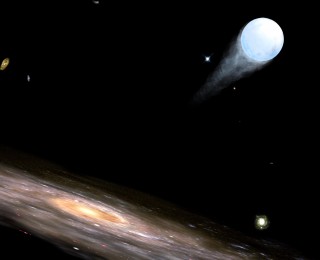
Orbiting our galaxy are many smaller dwarf galaxies. As they orbit, some of these galaxies produce vast streams of gas that stretch around our Milky Way galaxy. Much of this gas still has the potential for forming stars. This astrobite will summarize a recent discovery of one of these stars.
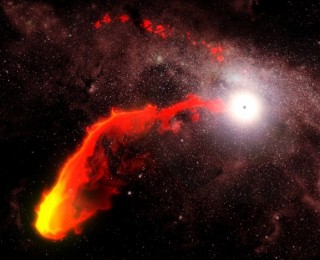
The black hole at the center of our galaxy, Sgr A*, is a very picky eater. However, with the discovery of the G2 cloud, astronomers have had the opportunity to watch the infrequent feeding process in Sgr A* in action. While the origin of this cloud is still debated, research is beginning to suggest that G2 is a gas cloud that was ripped away from a giant star in orbit around our galaxy’s central black hole.
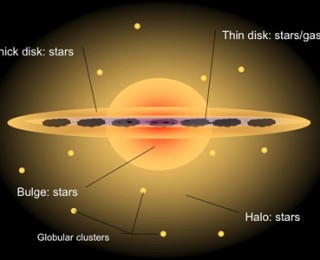
How the various structures within our own Milky Way galaxy evolved is still an open question that astronomers have been slowly piecing together for a very long time. These galactic archaeologists are beginning to test a previously proposed method known as “chemical tagging” to fingerprint stars in our galaxy and trace their origin.
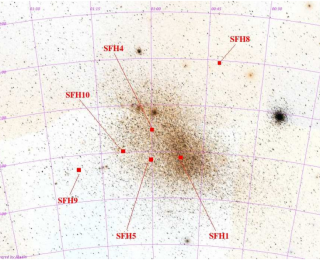
The authors of today’s paper find out just what kind of star formation history lies in the Milky Way’s next meal: The Small Magellanic Cloud. After all, they say you are what you eat.