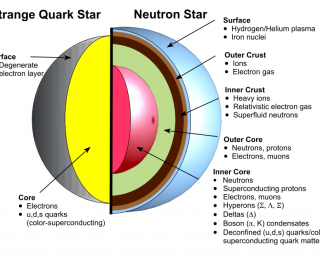
Peeling apart a neutron star
Neutron stars can provide insights into extreme and exotic states of matter.

Neutron stars can provide insights into extreme and exotic states of matter.
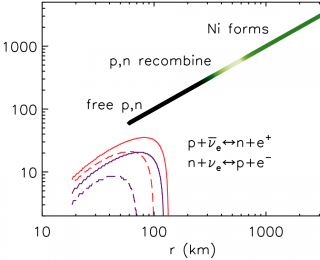
There aren’t many places in the universe that you can find a bunch of free neutrons not already trapped inside a nucleus—except in neutron stars. Luckily, neutron stars in violent mergers with other neutron stars, or with black holes, tend to disperse a little bit of their matter into the interstellar medium. Tidal forces eject some matter as the two objects swing around each other in their final orbits. Then, if an accretion disk forms, winds blown off the surface of the disk disperse even more matter. Surman and her colleagues look at the nucleosynthesis that occurs in this latter process, and find something surprising.
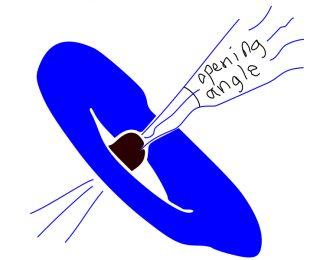
Null data are still data! Chen & Holz use a lack of detections to place a lower limit on the beaming angle of SGRBs.
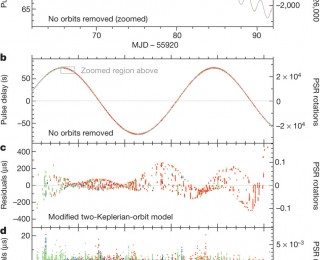
One of nature’s best clocks is a millisecond pulsar. These exotic stellar corpses are neutron stars: incredibly dense, rotating hundreds of times per second, and emitting powerful jets or beams of light. This creates a “pulsing” effect, much like a lighthouse.
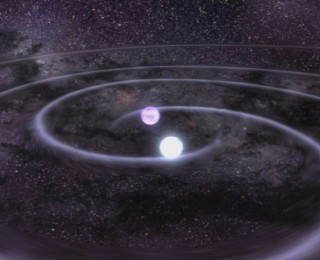
Recently, a population of short (a few micro-seconds) and energetic radio bursts were identified at cosmological distances. Today’s paper hypothesizes that these “Fast Radio Bursts” may be created in the final moments of a neutron star merger.
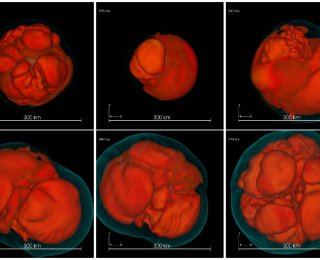
Recent computer simulations are shedding light on the brightest and most energetic phenomena in the Universe – supernova explosions. A team of researchers at the Max Planck Institute for Astrophysics modeled the formation of neutron stars in three dimensions with unprecedented accuracy, showing that as matter is drawn inward, it sloshes both asymmetrically and in spiral motions. It’s a bold, new look into the center of the supernova explosion and the birth of a neutron star.