
Meet the AAS Keynote Speakers: Evan Kirby
Dwarf galaxies: small blobs of dark matter (and stars and gas), or time traveling machines for studying chemical evolution? Professor Evan Kirby’s upcoming #AAS232 talk will tell you more.

Dwarf galaxies: small blobs of dark matter (and stars and gas), or time traveling machines for studying chemical evolution? Professor Evan Kirby’s upcoming #AAS232 talk will tell you more.
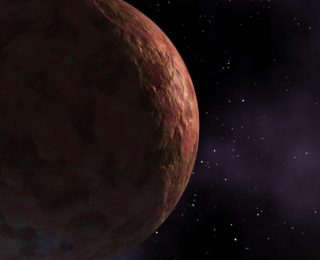
We report on Days 0 and 1 of the summer AAS meeting in Denver, CO. Highlights include a look at past, present, and future exoplanet research, a discussion of the state of diversity and inclusion efforts in astronomy, and a summary of where heavy elements come from.
As Carl Sagan said, “If you wish to make apple pie from scratch, you must first invent the universe.” More specifically, to make some neutron-rich elements like gold and uranium, you need neutron star mergers. Check out Professor Enrico Ramirez-Ruiz’s upcoming #AAS232 talk to learn more about what it takes to make the heaviest elements in the universe.
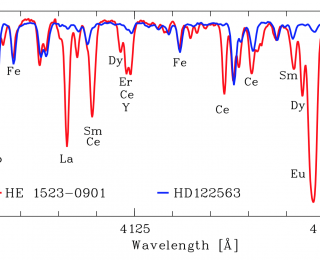
Elements heavier than iron are forged by neutron-capture processes. How are they distributed in the Galaxy?
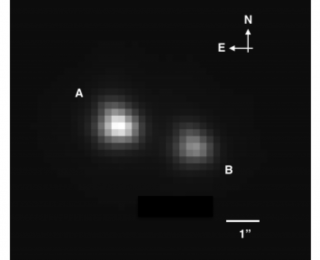
Read on to learn more about the discovery of the smallest star ever seen.
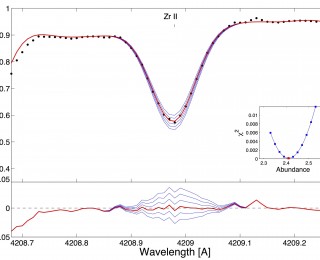
The authors use measurements of heavy element abundances to study the history of how and when the Milky Way became enriched in heavy elements. Specifically, they are concerned with elements formed through slow and fast neutron capture.