
Australia is closing its Very Large eyes to the Universe
Literally and figuratively, Australia is closing its eyes to the future of astronomy. Where does that leave its next generation of students?

Literally and figuratively, Australia is closing its eyes to the future of astronomy. Where does that leave its next generation of students?
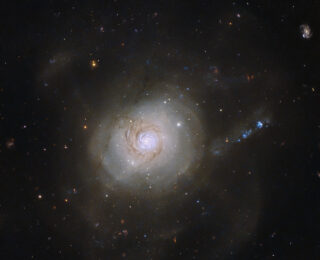
The distribution of post-starburst regions within galaxies is linked to diverse quenching pathways that are likely driven by mergers. Guest author, Emmy Wisz, explains how different star formation histories could be the key to understanding quenching mechanisms.

Ever been confused by a plot online or in a paper? This post decodes the secret language of astrophysics plots so you can finally read the universe like a pro.
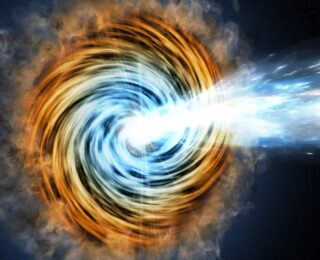
The authors of today’s featured paper investigated how a decades-long stakeout of a sample of blazars uncovered new insights into a serious case of cosmic “jet-lag”.
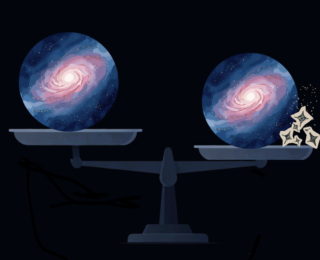
What if JWST’s early massive galaxies are not overestimated, but underestimated? A bottom-heavy IMF could hide tons of mass in faint stars.
Whether you’re a six-year-old scouring the backyard on Easter morning, or an exoplanet astronomer with observing time on the James Webb Space Telescope, nothing beats the feeling of finding what you’re looking for. So, you can imagine the authors of today’s paper were pretty excited when they received their transmission spectroscopy data of the sub-Neptune known as TOI-270d.