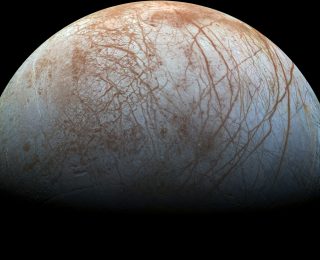
Water worlds – self-arrests, thermostats and long-term climate stability
Water worlds – do they exist? Or is there an omnipotent self-regulation mechanism which makes terrestrial planets look like Earth?

Water worlds – do they exist? Or is there an omnipotent self-regulation mechanism which makes terrestrial planets look like Earth?
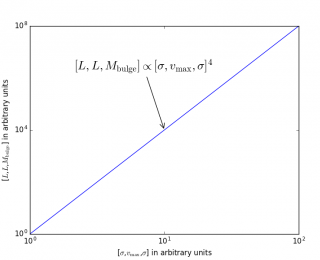
There are some papers that present relations that are important enough to get their own names. This astrobite presents three relations that have a remarkable similar shape, namely the Faber-Jackson, Tully-Fisher and M-sigma relations.
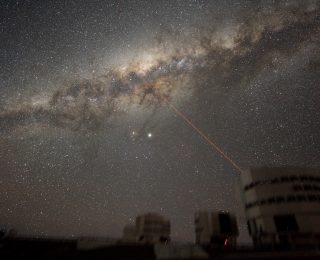
White dwarf stars are the final evolutionary state of most stars. They are everywhere in the Galaxy and are relatively easy to model. So can we learn about our Galaxy solely by studying them? The authors of today’s paper show us a way.
Image credits: ESO/Y. Beletsky.
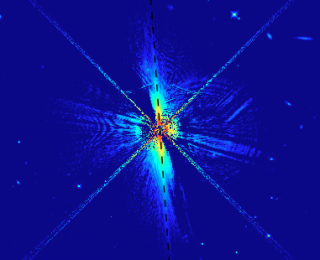
Embark on a dusty journey into the heart of debris disks – and why it’s important to talk dust if you want to understand planets.
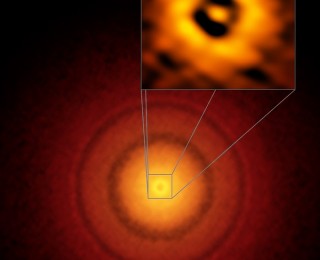
The image of the protoplanetary disk around HL Tau illustrating ring structures triggered a huge “WOW!”. Read on and get convinced by recent observations of TW Hya that ring structures seem to be rule rather than the exception.
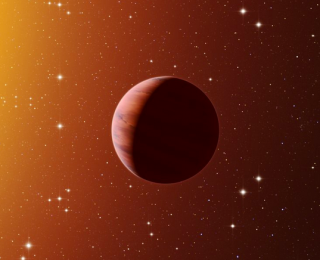
New research shows hot Jupiters find safety in numbers. According to radial velocity data, these giant exoplanets are more commonly found around stars in open clusters.