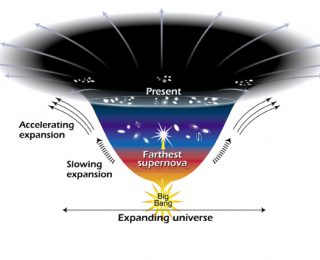
The Trouble with H0 (or not?)
Theres trouble brewing in the field of cosmology, as astrophysicists attempt to understand the latest measurements of the Hubble constant.

Theres trouble brewing in the field of cosmology, as astrophysicists attempt to understand the latest measurements of the Hubble constant.
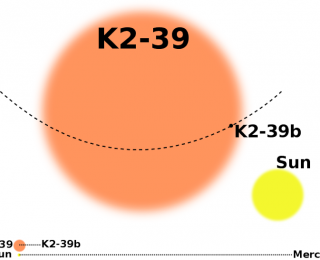
Stars at later stages of their evolution lack planets at small orbits, which is believed to be a consequence of disruption. However, the authors of the featured article found a large planet around a star at a late stage of its evolution.
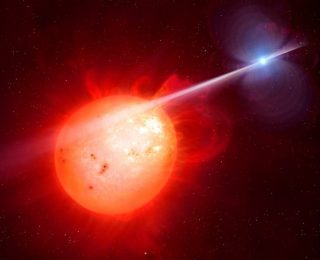
Sometimes a mystery can hide in apparently plain things. Astronomers have just discovered that a delta Scuti star known for over 40 years is actually something entirely different and full of peculiarities.
Image via M. Garlick/University of Warwick, ESA/Hubble.
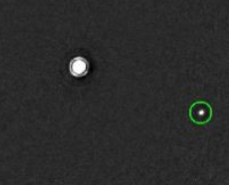
What can we learn from the lack of giant planets found at wide separations?
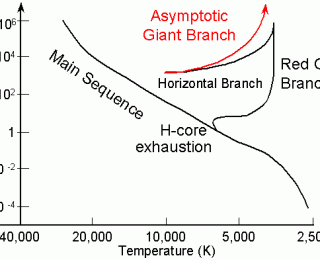
By the time a star becomes a white dwarf, much of its mass will have been lost. When does this mass loss occur and what drives it? Read today’s astrobite to find out.
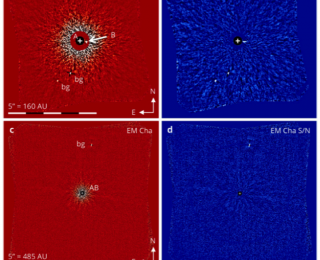
Ever wondered whether the planet Tatooine could be real? In today’s paper, the authors discuss a new technique to directly image distinct planets orbiting binary stars, just like in Star Wars.