by Caroline Morley | Nov 8, 2011 | Daily Paper Summaries
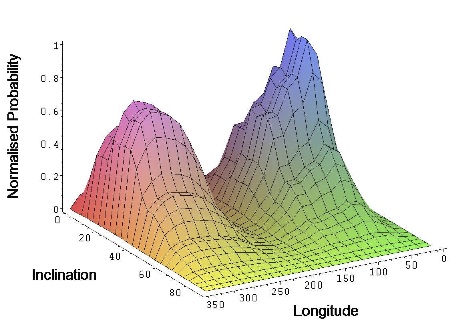
One of the many cool observations that have come from the WISE telescope survey this year has been the discovery of the first Trojan asteroid orbiting at the same semi-major axis as the Earth. The authors of this paper outline a way to optimize future surveys to find more of these Earth Trojans.
by Kirit Karkare | Nov 8, 2011 | Daily Paper Summaries
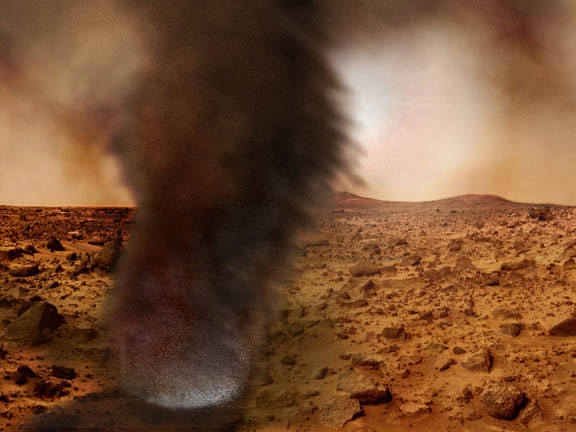
Do dust storms cause lightning on Mars? This paper uses the Allen Telescope Array to search for electrostatic discharge on the Red Planet.
by Chris Faesi | Oct 27, 2011 | Daily Paper Summaries
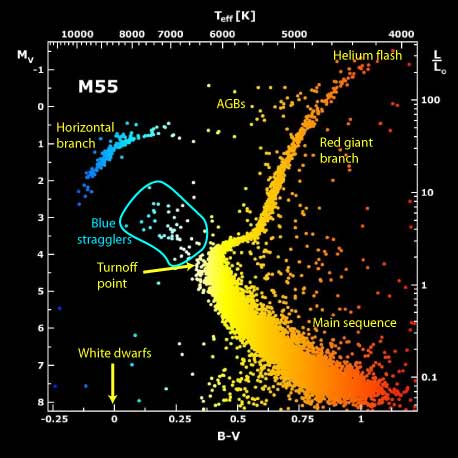
Blue stragglers are stars that, given their mass, should have already evolved beyond the main sequence, and their existence has been a mystery to astronomers for decades. These stars must somehow have gained mass during their main sequence lifetimes; stellar collisions and mass transfer were proposed as the most likely mechanisms that could cause this to happen. A unique combination of observations, simulations, and statistical analysis was recently used to constrain their formation process.
by Ian Czekala | Oct 20, 2011 | Daily Paper Summaries
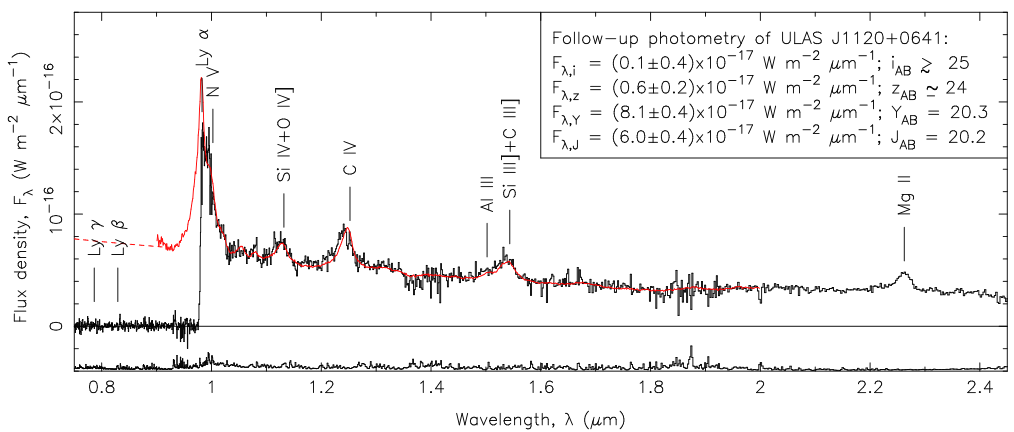
While high-redshift quasars are very interesting objects in their own right, their incredible luminosities allow them to act as background light sources that illuminate the intervening universe on our line of sight. One could think of quasars as giant flashlights that the universe uses to make really interesting spectroscopic shadow puppets back here on Earth.
by Kirit Karkare | Oct 11, 2011 | Daily Paper Summaries
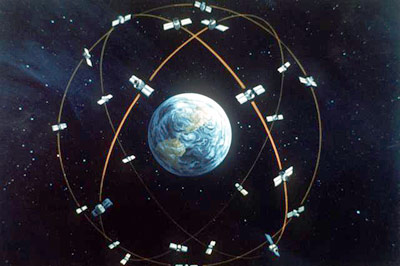
Water absorption in the atmosphere can be a big problem for Near-IR observations. This paper shows how to measure and correct for atmospheric water vapor using GPS satellites.
by Anna Rosen | Oct 10, 2011 | Daily Paper Summaries
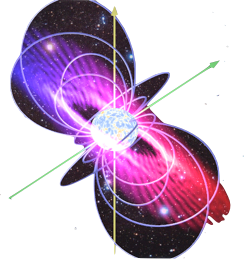
The Magnetism in Massive Stars (MiMeS) project is a statistical survey to answer the big questions related to magnetism in hot, massive stars. So far they have observed 166 stars, 14 of which host strong, ordered magnetic fields.
