by Caroline Morley | Jun 7, 2011 | Daily Paper Summaries
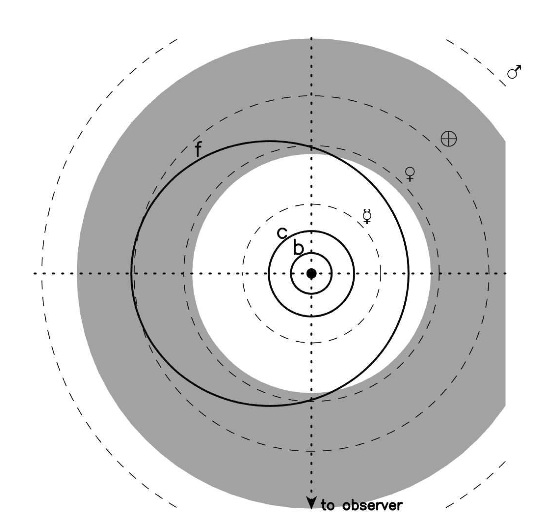
Improving stellar astrophysical measurements will help us to better characterize exoplanets. The interferometric observational techniques applied here allow scientists to precisely measure the stellar parameters (including star’s radius) of a nearby system with exoplanets, including a transiting super-Earth.
by Nathan Sanders | May 30, 2011 | Daily Paper Summaries
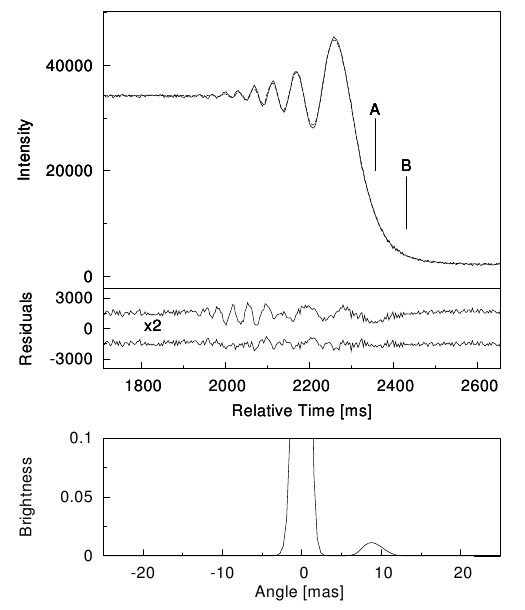
These authors use the surface of the Moon to distinguish between binary star systems separated by just thousandths of an arcsecond – far smaller than can be resolved by traditional imaging.
by Caroline Morley | May 24, 2011 | Daily Paper Summaries
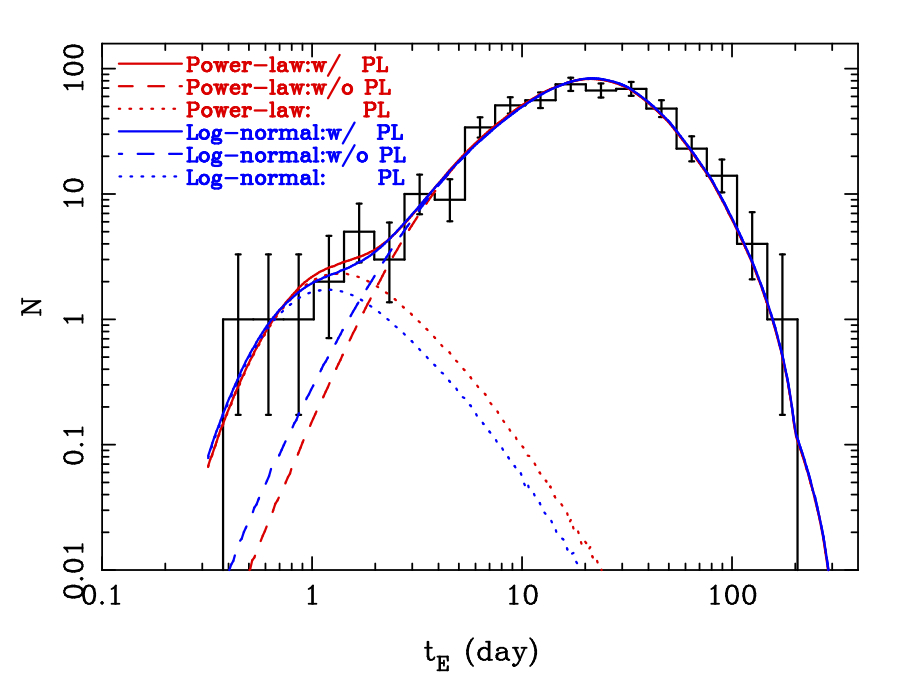
A gravitational microlensing survey finds that there is a large population of planets unbound or far from a star. In fact, the authors of this paper find that there are ~1-3 times as many Jupiter-mass planets at least 10 AU from a main sequence star as there are stars in the galaxy. These objects could either be cold, distant objects in solar systems, or, the authors suggest, they could be free-floating planets, possibly ejected from solar systems after formation.
by Dan Gifford | May 17, 2011 | Daily Paper Summaries
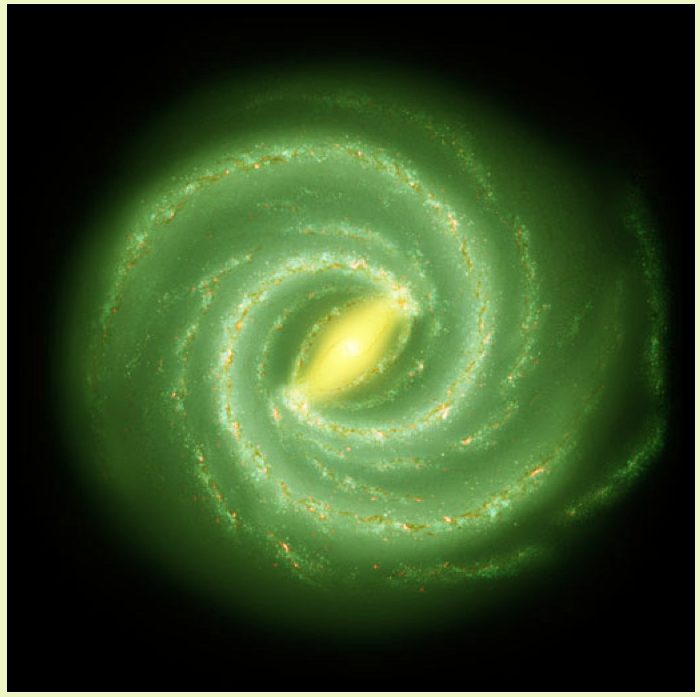
Our Milky Way seems to be passively evolving towards the red sequence… very efficiently!
by Courtney Dressing | May 11, 2011 | Daily Paper Summaries
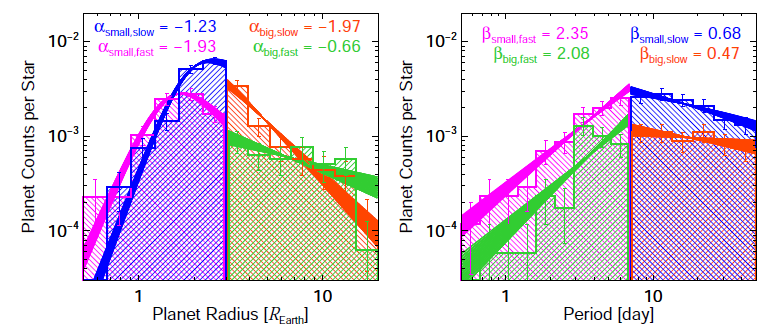
What does the Kepler data tell us about the number of planets per star and the distribution of planets in radius and orbital period? Andrew Youdin addresses that question by considering the selection effects in the Kepler sample and fitting a joint powerlaw in radius and orbital period.
by Tanmoy Laskar | May 8, 2011 | Quick Notes
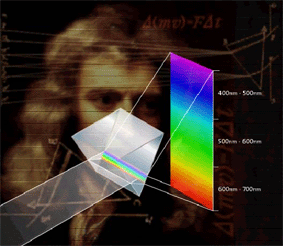
Astronomers seldom touch, smell, hear, or taste astronomical sources – their primary sensory input is light. Read about how astronomers use the electromagnetic spectrum to unravel the mysteries of the Universe!
