by Aaron Bray | Jul 9, 2011 | Daily Paper Summaries
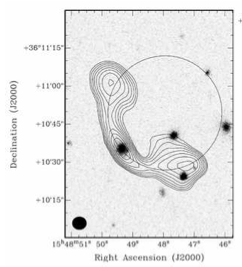
Freeland & Wilcots (2011) present observations of seven “double bent” radio galaxies which they use to measure the density of the intergalactic medium in galaxy groups. They use these observations to draw conclusions about the disruption of dwarf galaxies and the baryon content of these groups.
by Courtney Dressing | Jul 6, 2011 | Daily Paper Summaries
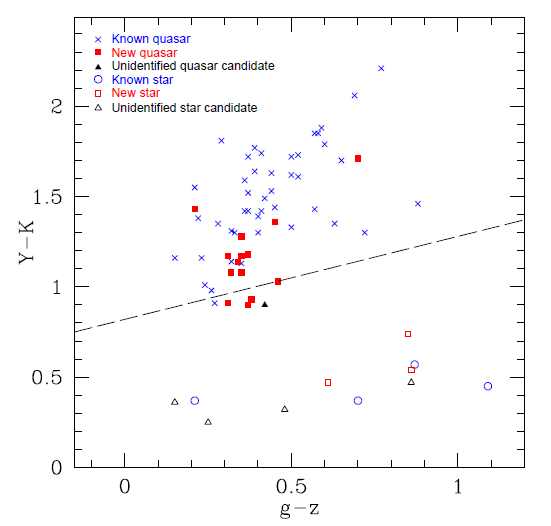
What happens when redshifted quasars masquerade as stars? How do astronomers isolate them from the stellar population?

by Dan Gifford | Jun 28, 2011 | Daily Paper Summaries, Guides
The word “bias” shows up all the time in astronomy. What exactly does it mean? Also, how a recent study tackles the argument that the M-sigma relation may be biased.
by Courtney Dressing | Jun 22, 2011 | Daily Paper Summaries
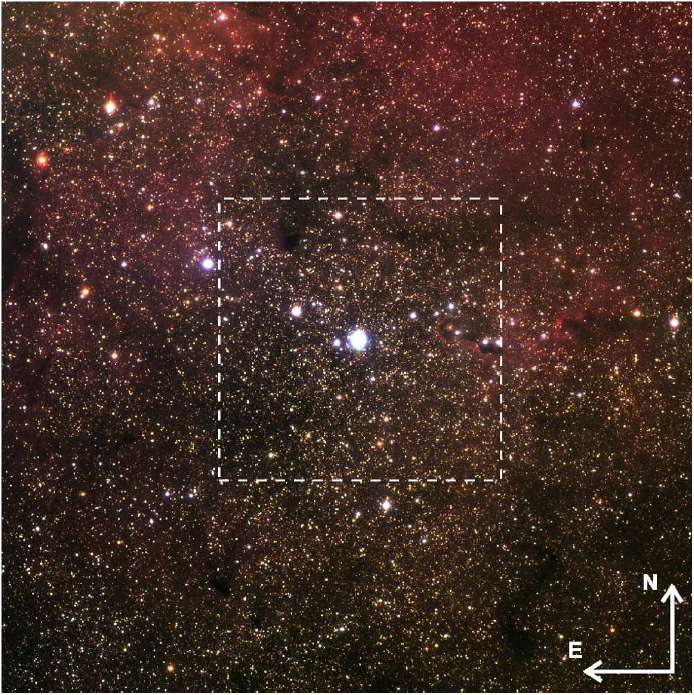
Neuhäuser et al. are searching for young Jovian planets orbiting stars in open clusters. What are the advantages of looking for planets in clusters?
by Caroline Morley | Jun 21, 2011 | Daily Paper Summaries
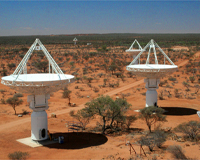
EMU will contribute to many different areas of astrophysics from stars to galaxies to cosmology; it will find interesting objects that can be followed up with other observatories designed for deep observations such as ALMA. ASKAP will also provide an excellent testbed for the new phased array detector technology expected to be used in the Square Kilometre Array in the next decade.
by Ian Czekala | Jun 9, 2011 | Daily Paper Summaries
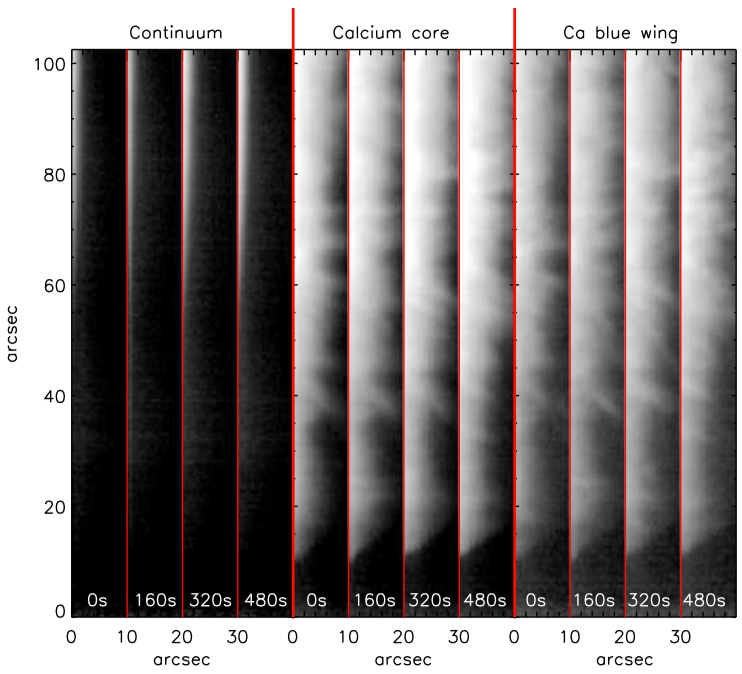
In previous astrobites, we’ve emphasized how important spectroscopy is to an astrophysicist’s understanding of the universe. From radial velocity measurements involved in the discovery of planets, determination of the ionization history of the universe, characterization of P Cygni profiles and more, spectroscopic analysis is a crucial part of an astrophysicist’s toolbox. These sources are faint! If you are impressed by the results obtained by galactic and extra-galactic spectroscopy, be prepared to marvel at the extremely high signal to noise data that can be obtained by observing our brightest source in the sky, the Sun. The sun is truly a spectroscopist’s delight.
