by Jaime Green | Nov 5, 2014 | Daily Paper Summaries
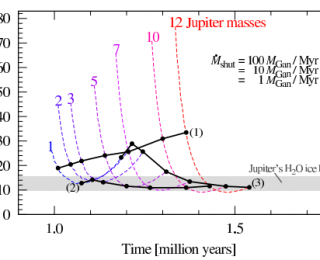
Those of us who love astrobiology get really worked up about the lack of Earth-sized exoplanets found at Earth-like distances from their stars. All we want, we who hope for lots of extraterrestrial life, is a bunch of Earth-like planets doing Earth-like things so we can feel better about the odds for lots of Earth-like life in the universe.
by Nick Ballering | Oct 13, 2014 | Daily Paper Summaries
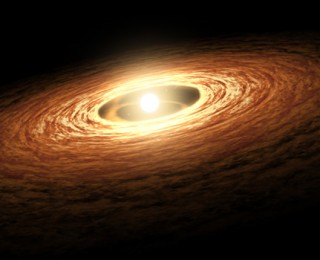
There does not seem to be enough mass in protoplanetary disks to build the planetary systems we’ve detected. The solution: planet formation might start sooner than previously thought.
by Nick Ballering | Sep 15, 2014 | Daily Paper Summaries
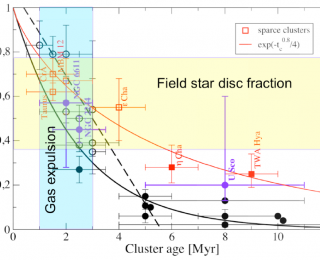
Observational biases may significantly underestimate the lifetime of protoplanetary disks.
by Jaime Green | Aug 13, 2014 | Daily Paper Summaries
Of all the kinds of planets we’re finding around other stars—hot Jupiters and mini-Neptunes and those dubiously called “Earth-like”—super-Earths orbiting close to their stars are among the most abundant. While planets so close to their stars are poor candidates for habitability, they are important to understanding the possibility of other habitable planets in these seemingly common systems.
by Jaime Green | Jul 16, 2014 | Daily Paper Summaries
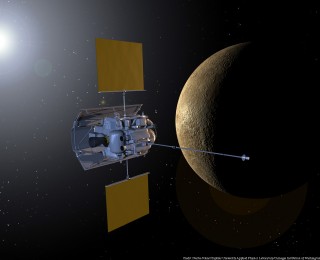
A new model explains Mercury’s major density with magnetism.
by Nick Ballering | May 26, 2014 | Daily Paper Summaries
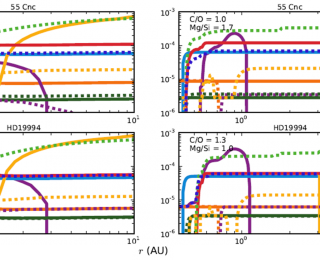
A new model simulates the composition of growing planetesimals in an evolving protoplanetary disk. The model predicts that carbon-rich terrestrial planets can form more easily than previously thought.
