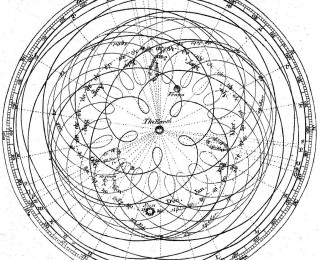
by Zephyr Penoyre | Feb 24, 2016 | Daily Paper Summaries
By building a simulation that goes from the scale of galaxies down to individual rocky planets we come to the realization that the earth is unremarkable, but far from typical, challenging our Copernican world view.
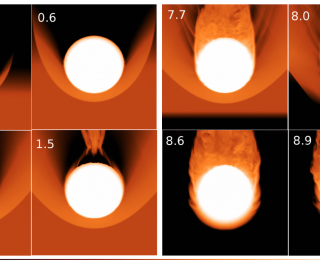
by Jesse Feddersen | Feb 16, 2016 | Daily Paper Summaries
Red giant stars are bright enough to see at the center of our galaxy, but they are missing. A new study puts stars in a wind tunnel to explore a possible way to dim the lights.
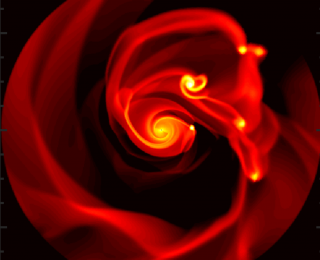
by Tim Lichtenberg | Feb 15, 2016 | Daily Paper Summaries
Massive gas inflow can trigger disks around young stars to become gravitationally unstable, resulting in vigorous accretion onto the star.
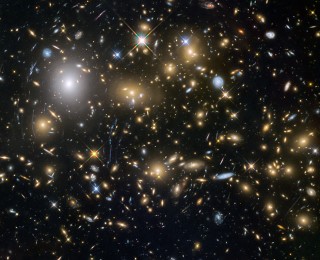
by Steph Greis | Jan 22, 2016 | Daily Paper Summaries
Our current understanding of the Universe suggests that its largest structures, such as clusters and groups of galaxies, would have formed only within the second half of the Universe’s current age. However, today’s paper explores the proposed observational evidence that such structures may actually have began forming a lot earlier than we expected. This poses intriguing questions about the way we model the cosmos, how we interpret our observations, and whether we might need to rethink cosmology.

by Ben Cook | Jan 13, 2016 | Daily Paper Summaries
What if I told you it was true? All of it.
by Jesse Feddersen | Jan 12, 2016 | Daily Paper Summaries
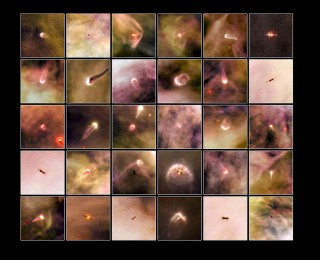
Sherlocks Holmes investigates the scene of a crime for clues about whodunit. Today’s paper investigates the massacre of circumstellar disks in a star cluster for clues about the cluster itself.
