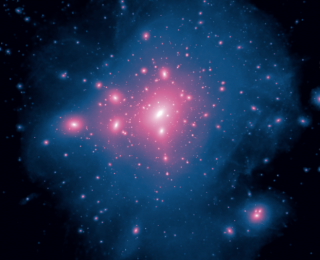
Disentangling Dark Matter Physics
We can’t study dark matter directly by our usual means of studying the cosmos: light. But dark matter leaves its fingerprints on the universe in other ways…

We can’t study dark matter directly by our usual means of studying the cosmos: light. But dark matter leaves its fingerprints on the universe in other ways…
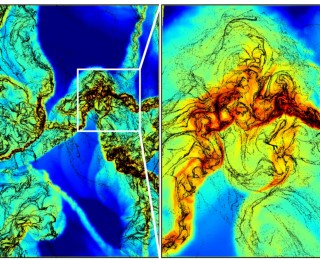
Molecular clouds, where new stars are born, are made of two components: gas and dust. The gas is mostly hydrogen, and the dust is made of elements crucial for forming planets and people, like silicon and carbon. Today’s paper shows that these two components behave very differently in a simulated molecular cloud. This could have exciting consequences for the growth of dust and the formation of stars and planets.
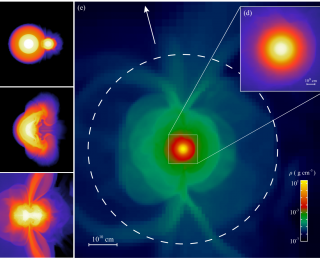
A dry planet and one with a thick atmosphere close together seems to be very weird. How about smashing one with a huge impactor?
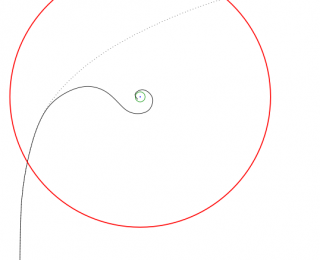
A model that needs fewest parameters to explain a scenario is favourable. The fact that mm-size dust grains (chondrules) are present in the entire solar system brings rise to the question, whether all bigger solid objects are a collection of chondrules.
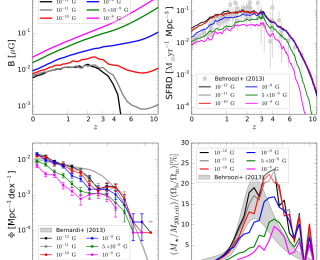
Although magnetic fields exist virtually everywhere, we still do not know quite a lot about the role they play in the evolution of our Universe. On galaxy scales and larger, they can be difficult to observe, but may play a crucial role in how they evolve. Today’s astrobite discusses work done to try and understand how initially weak fields in the early Universe can affect galaxy evolution over time.
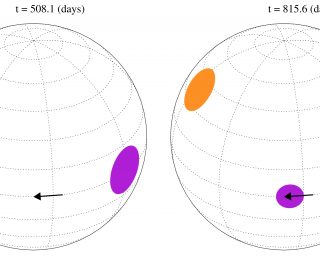
On using photometric data from Kepler to study starspots, and to measure differential rotation rates.