Entering the Matrix: Exploring the formation history of a universe on your laptop
How Dylan Nelson produced amazing, interactive visualizations of the Illustris simulation

How Dylan Nelson produced amazing, interactive visualizations of the Illustris simulation
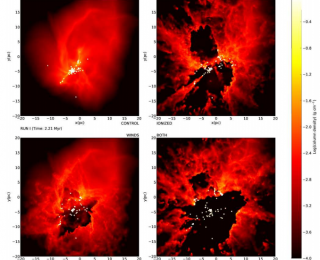
Massive stars emit energetic radiation and expel strong winds that can disrupt their natal environments. New simulations show that these effects are important in the evolution of stellar nurseries and can account for some of the observed low efficiency of star formation.
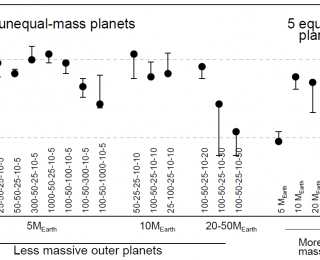
Vega’s system of debris disks can be explained by a series of planets that constantly transport material inwards towards the star.
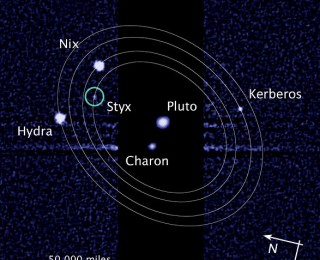
Pluto’s small satellites have very low escape velocities, which means that dust kicked up by impacts has a relatively easy time of escaping rather than settling back down to the little moon’s surface. Today’s paper looks at the fates of that dust.
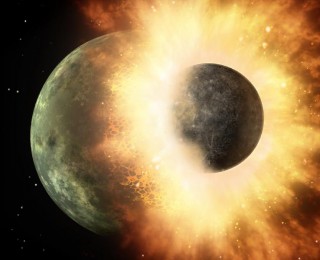
How do giant planets affect the water content of rocky planets in habitable zones? Astronomers have run new planet formation simulations to try to answer this question.
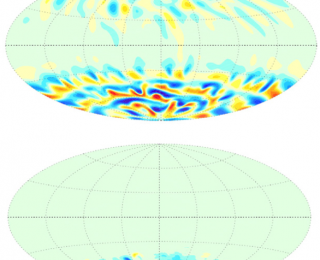
Strongly magnetized rocks on Mars are primarily concentrated in the southern hemisphere. This paper raises a serious objection to the hypothesis that localized dynamo action in the ancient martian core explains this puzzling observation.