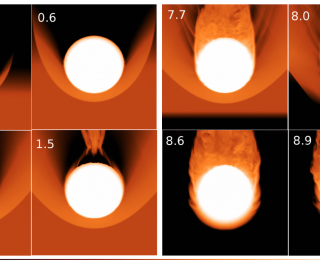
The Case of the Missing Giants
Red giant stars are bright enough to see at the center of our galaxy, but they are missing. A new study puts stars in a wind tunnel to explore a possible way to dim the lights.

Red giant stars are bright enough to see at the center of our galaxy, but they are missing. A new study puts stars in a wind tunnel to explore a possible way to dim the lights.
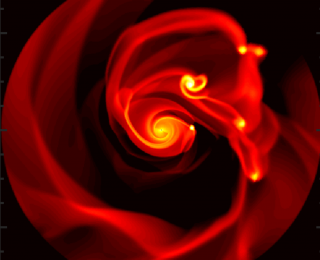
Massive gas inflow can trigger disks around young stars to become gravitationally unstable, resulting in vigorous accretion onto the star.
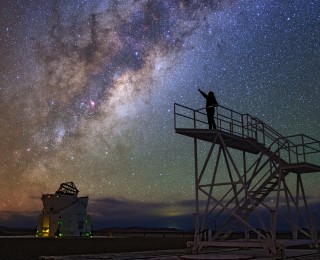
Using data obtained from surveys of stars in the Milky Way and some clever programming, it is now possible to find stellar siblings scattered throughout our Galaxy, and thus obtain invaluable information on its evolution.
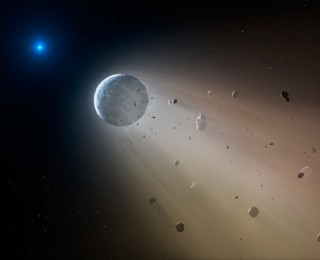
Astronomers may have finally observed the event that explains polluted white dwarfs and their debris disks.
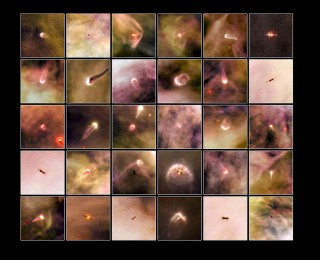
Sherlocks Holmes investigates the scene of a crime for clues about whodunit. Today’s paper investigates the massacre of circumstellar disks in a star cluster for clues about the cluster itself.
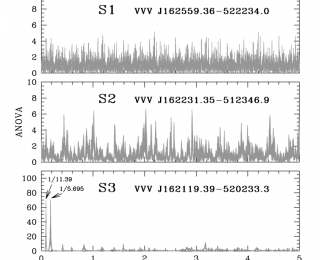
Today we use a new paper to revisit the possible dwarf galaxy discovered 90 kpc from the Milky Way.