Finding the Helium Flash
Just as seismologists determine the structure of the Earth through surface vibrations, so asteroseismologists do the same for stars

Just as seismologists determine the structure of the Earth through surface vibrations, so asteroseismologists do the same for stars
Could higher than expected mass-loss rates for evolved massive stars lead to progenitors for peculiar Supernovae?
Using a clever technique, the authors identify a sub-population of rotating Wolf-Rayet stars.
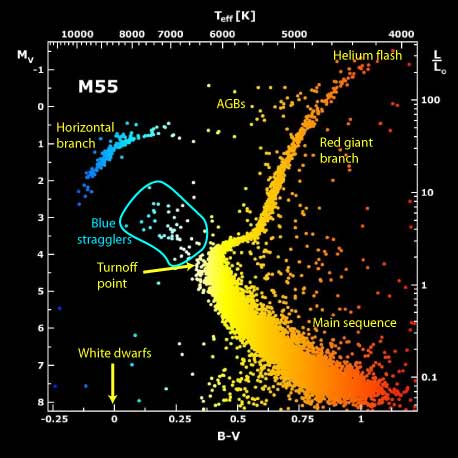
Blue stragglers are stars that, given their mass, should have already evolved beyond the main sequence, and their existence has been a mystery to astronomers for decades. These stars must somehow have gained mass during their main sequence lifetimes; stellar collisions and mass transfer were proposed as the most likely mechanisms that could cause this to happen. A unique combination of observations, simulations, and statistical analysis was recently used to constrain their formation process.
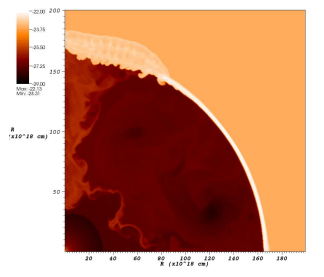
How can the medium immediately surrounding massive stars affect our observations of Gamma-Ray Bursts?
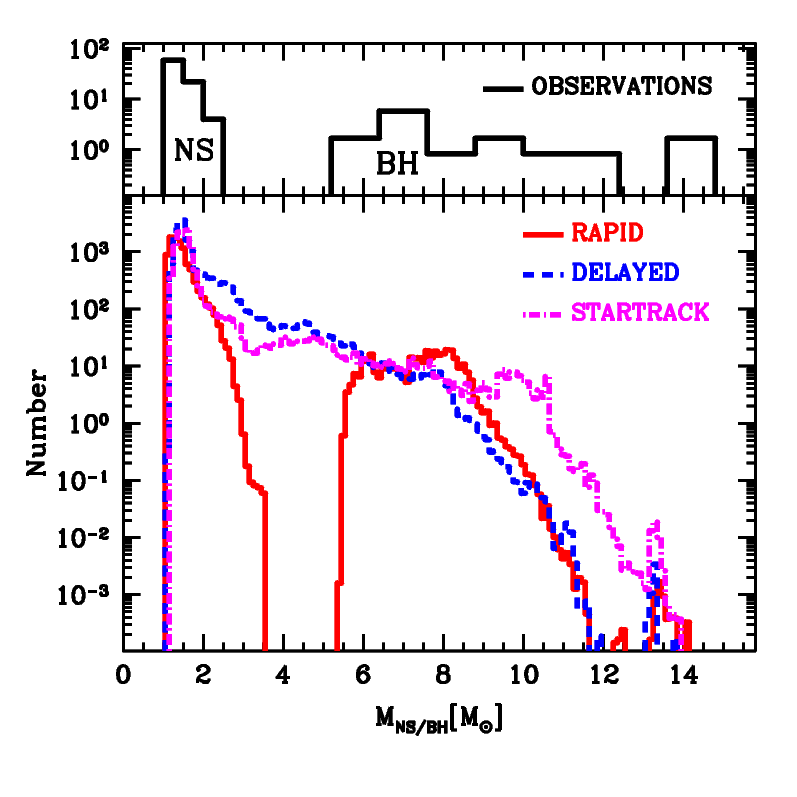
You might think that stars with an approximately continuous distribution of masses would lead to remnants with an approximately continuous distribution masses. But you’d be wrong.