
by Mia de los Reyes | Jan 4, 2018 | Career Navigation, Current Events
As Professor Robert Fisher says, “if Yoda had to summarize Type Ia supernovae, he might have said something like ‘the classical model is a theory that misread could have been.'” What is he talking about? Come to his #AAS231 talk to find out!
by Elisabeth Matthews | Dec 29, 2016 | Daily Paper Summaries
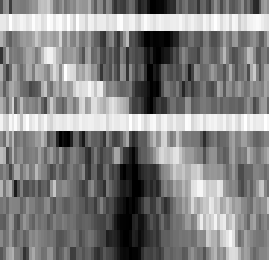
Today we look at a polluted white dwarf in a binary system: by calculating how many sperm whales accrete onto the white dwarf each second, can we say anything about planet formation?
by David Wilson | Aug 30, 2016 | Daily Paper Summaries
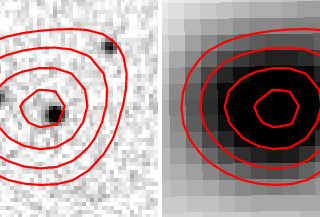
How do planets meet their ends? For many of the smallest worlds, it maybe as a debris disc strewn around the tiny white dwarf that is all that is left of their stars. The faint infrared glow from nearly forty such discs have been discovered, their rocky origins given away by the chemical composition of the material falling onto the parent white dwarf. Today’s paper adds another disc to the sample, although not without difficulty.
by David Wilson | Jul 8, 2016 | Daily Paper Summaries
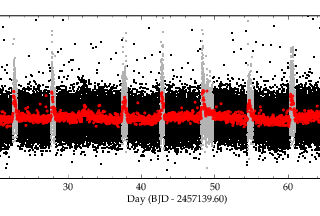
Nearly a year ago, Astrobites reported on an unexpected finding from the Kepler spacecraft: A pair of white dwarfs that were “outbursting”, becoming as much as 20 percent brighter every few days before quieting down again. Today’s paper adds another two outbursting white dwarfs, and begins to explore the reason for this hitherto unobserved behavior.
by David Wilson | Apr 14, 2016 | Daily Paper Summaries
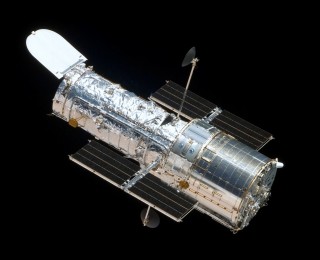
White dwarfs, the tiny, burnt out cores that stars like the Sun leave behind when they run out of fuel, are a surprisingly ideal place to look for potentially habitable planets. The authors of today’s paper have checked to see if we haven’t already found one, entirely by accident.
by David Wilson | Nov 23, 2015 | Daily Paper Summaries
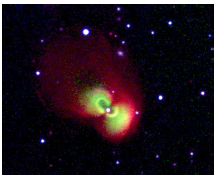
On 16th November in 483 CE, astronomers in China recorded the appearance of “a guest star east of Shen, as large as a peck measure, and like a fuzzy star”. The new celestial light shone brightly for just under a month, then faded to nothing. Over 1500 years later, the authors of today’s paper suggests that they may have found the source.
