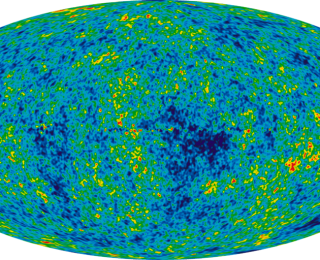
To the Center of The Cold Spot
Astronomers measure the randomness in the Cosmic Microwave Background radiation to determine the cause of an anomalously cold spot.

Astronomers measure the randomness in the Cosmic Microwave Background radiation to determine the cause of an anomalously cold spot.
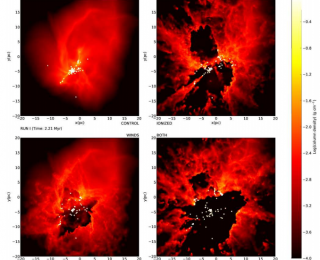
Massive stars emit energetic radiation and expel strong winds that can disrupt their natal environments. New simulations show that these effects are important in the evolution of stellar nurseries and can account for some of the observed low efficiency of star formation.
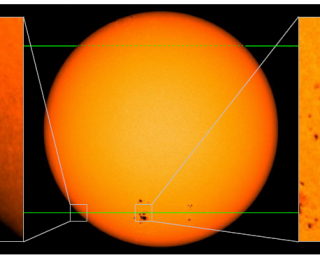
Kepler finds the signature of a transiting white dwarf. Instead blocking the light of its companion star, the white dwarf magnifies it, creating a light curve that periodically brightens.
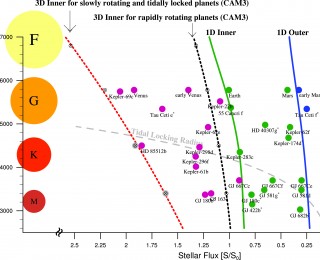
Find out how cloudy atmospheres can improve the chances for habitability in close-in planets.
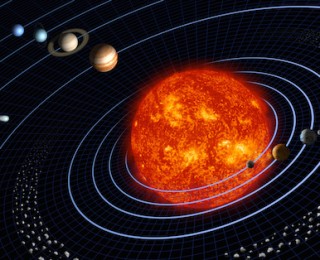
Earth and its Solar System compatriots all have nearly circular orbits, but many exoplanets orbit their stars on wildly eccentric paths. Is our home system strange? Or is our sense of the data skewed?
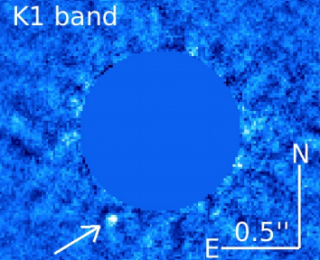
HD 95086 b is one of the first exoplanets directly imaged with the newly commissioned instrument Gemini Planet Imager. This is only the first in what is likely to be a long line of exciting results coming from this state of the art instrument.