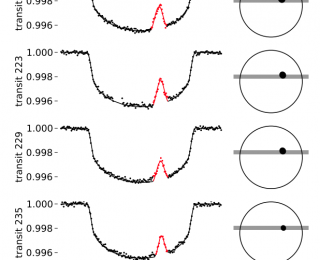
Can planets and stars spin in unison?
The orbits of some recently discovered exoplanets seem to be synchronised with the rotation of their host stars. Can this mystery be explained?

The orbits of some recently discovered exoplanets seem to be synchronised with the rotation of their host stars. Can this mystery be explained?
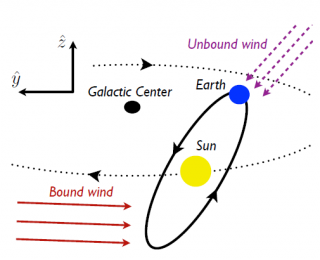
Much like the Cosmic Microwave Background, the Cosmic Neutrino Background permeates our Universe and it could take us back to 1 second after the Big Bang. Today, we discuss the effect of the Sun on modulating the expected signal from the neutrino background.
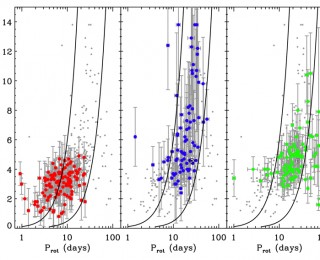
We have repeatedly seen how Kepler goes above and beyond its original mission of finding exoplanets. Today’s paper is no exception.
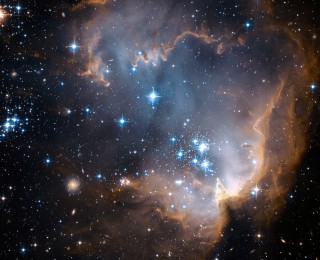
The authors use a cosmological simulation to characterize the rates at which galaxies form new stars.
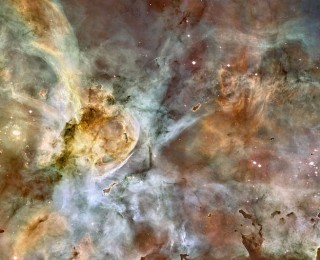
Spectra from the light echoes of distant supernovae can be used to probe the three dimensional structure of these massive and poorly-understood explosions.
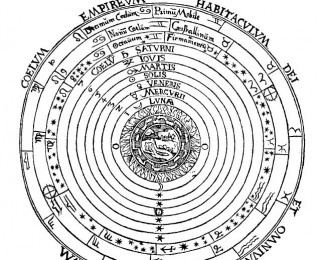
Why resort to complicated theories that involve mysterious, unknown forces and states of matter? The geocentric model of the Universe nicely explains 1st century C.E. data.