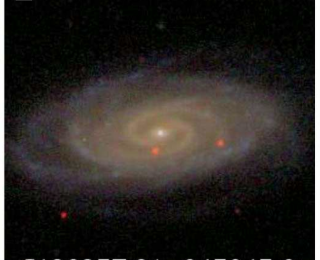
Bulgeless galaxies with growing black holes
Mergers make bulges in galaxies and black holes generally live in bulges, so mergers must grow black holes – simple. That was until we found bulgeless galaxies containing growing black holes…

Mergers make bulges in galaxies and black holes generally live in bulges, so mergers must grow black holes – simple. That was until we found bulgeless galaxies containing growing black holes…
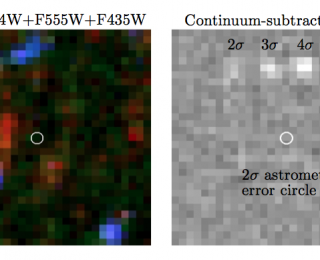
Archival data are able to place constraints on the origin of supernova 2011fe.
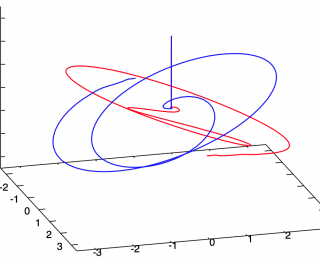
Imagine a spinning skater. She pulls her arms in a little and spins faster. She brings her arms all the way into her chest, and spins really fast, and then bam! she rockets up into the sky. Seven years ago, computer simulations revealed a configuration of two spinning black holes that merged in this way, jumping out of their orbital plane with a velocity of several thousand km/s. Not only is this weird, it’s also important. We know that large galaxies host supermassive black holes at their centers. We also know that galaxies merge, presumably introducing their black holes to one another. If the newly formed black hole were to exit the galaxy entirely, it could carry its accretion disk with it, and be observable as a displaced core.
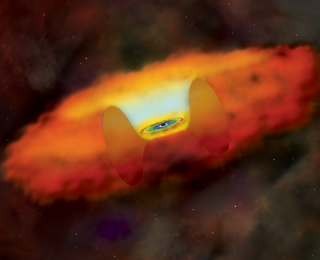
We can measure the expansion of the universe with velocities and distances of extragalactic objects. But measuring distances is tough! The authors of this paper have developed a new technique for measure the distances of AGN using the “echo” of light from heated dust.
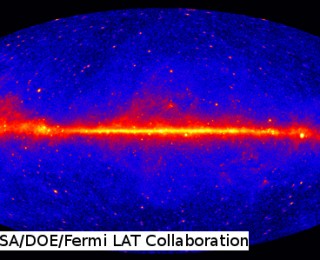
For a few years now, excess emission of gamma-rays in the direction of the Galactic Center has puzzled scientists. In the paper we discuss today, the authors re-analyze data from the Fermi telescope to get new insights into the origin of this excess emission. They make the case for the signal being described by dark matter particles annihilating in the center of our Galaxy.
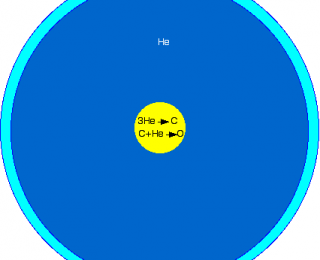
Enter the observed oddball: a subdwarf B (sdB) star. These unexpected stars are fusing helium into carbon and oxygen in their core and only have a thin hydrogen envelope. So, where did the hydrogen go?