by Josh Fuchs | May 16, 2013 | Daily Paper Summaries
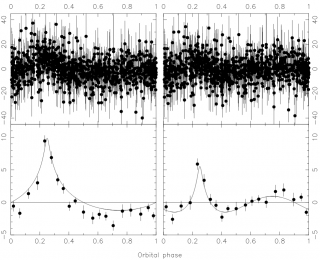
Shapiro time delays are one of the four tests of general relativity possible in the solar system. Astronomers can use these timing delays to measure properties of binary pulsar systems.
by Jessica Donaldson | May 15, 2013 | Daily Paper Summaries
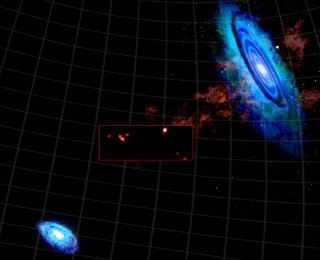
Seven gas clouds have been found in the region between two galaxies. Are they part of a intergalactic filament or remnants from a past galaxy interaction?
by Caroline Morley | May 9, 2013 | Daily Paper Summaries
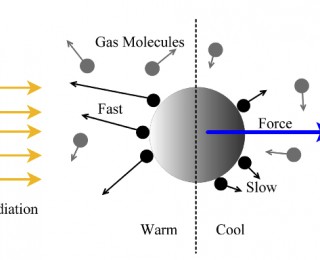
Mercury’s high density has been a longstanding puzzle in planetary science. Its density means that it must have a significantly higher iron abundance than Venus, Earth, Mars, or the asteroids, probably in the form of a large iron core. NASA’s MESSENGER mission has challenged many of the hypothesized ways to create an iron-rich Mercury; a new hypothesis is required.
by Sukrit Ranjan | May 8, 2013 | Daily Paper Summaries
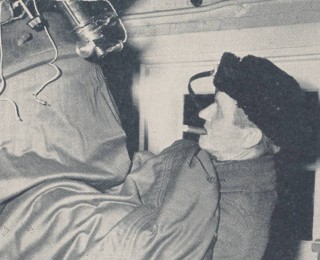
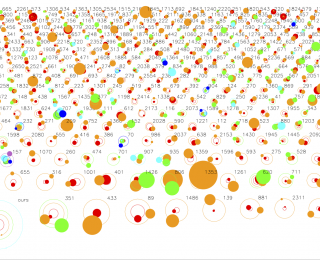
Caption: H. A. Sawyer loading plates into the Harvard 16” Metcalf Doublet telescope. Picture from http://hea-www.harvard.edu/DASCH/telescopes.php Paper Title: 100-year DASCH Light Curves of Kepler Planet-Candidate Host Stars Authors: S. Tang et al First Author’s Affiliation: Harvard-Smithsonian Center for Astrophysics, Cambridge, MA; Kavli Institute for Theoretical Physics, Santa Barbara, CA; California Institute of Technology, Pasadena, CA Journal: Publications of the Astronomical Society of the Pacific (Submitted) Introduction: the DASCH projectAstronomy has advanced in leaps and bounds over the last few hundred years. Perhaps the single greatest advance has been the switch from observing with our eyes to observing with cameras. Where once we inspected the heavens with our eyes and relied on sketches to record what we saw, now we attach imaging mechanisms directly to the telescope. Not only does this allow us to collect more photons, imaging mechanisms also give us the ability to store data for later analysis. A little more than a century ago, astronomers at Harvard made the switch to using photographic plates to image the heavens. Each plate, once analyzed, was cataloged, archived, and forgotten…until now.Researchers at Harvard recently recognized the promise of the data being held in these archives. Over a century’s worth of observations of the sky are recorded in these plates. By contrast, most objects observed as part of other projects have no more than a few decades worth of observations at best. This dataset offers us the remarkable opportunity to study how stars have evolved over almost a century. Who knows what long-term trends or cycles might be identified?To realize the potential of this dataset and answer questions like these, the...
by Justin Vasel | May 7, 2013 | Daily Paper Summaries
Title: Why Does Nature Form Exoplanet Easily Author: Kevin Heng Institution: University of Bern, Center for Space and HabitabilityIt’s an exciting time for planet hunters. Over the last few years, the search for extrasolar planets (“exoplanets” for short) has become one of the hottest topics in astronomy. During every exoplanet talk that I’ve attended lately, the speaker started out by announcing the total number of exoplanets discovered to date, which they quickly follow with the caveat along the lines of “Well, that’s the total number as of Wednesday, but it’s probably out of date by now.” Thanks to the Kepler Space Telescope, COROT, and other ground-based observatories, planet hunters are finding these things so fast we should probably start barcoding them.If you keep up with us here at Astrobites, you’ve no doubt read all about habitable zones, hot Jupiters, and super Earths (after all, “Exoplanets” is one of the most common tags for our posts, seconded only by “Observations”). Today, I’d like to summarize a recent arXiv submission that takes some time to appreciate the apparent abundance of exoplanets in our galaxy, especially because we don’t rightly know why they are so abundant in the first place. The paper is a recapitulation of our theoretical understanding of exoplanet formation, which appears to be not that great. Based on our current theoretical understanding, forming exoplanets is no walk in the park, but Nature makes it look easy. The author encapsulates this conundrum in one of the most poetically terse abstracts I’ve ever read: “The ubiquity of worlds beyond our Solar System confounds us.”Planets EverywhereKepler has only been hunting planets since 2009,...
by Ben Montet | May 3, 2013 | Daily Paper Summaries
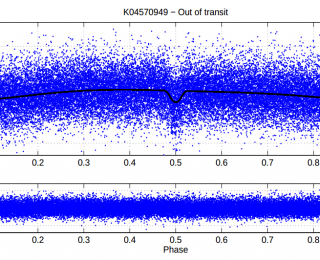
Faigler et al. apply their BEER algorithm to a collection of stars in the Kepler field and find a hot Jupiter missed by the Kepler Science Team, showing a new way to find and characterize planets without follow-up observations.
