by Nathan Goldbaum | Jul 2, 2011 | Daily Paper Summaries
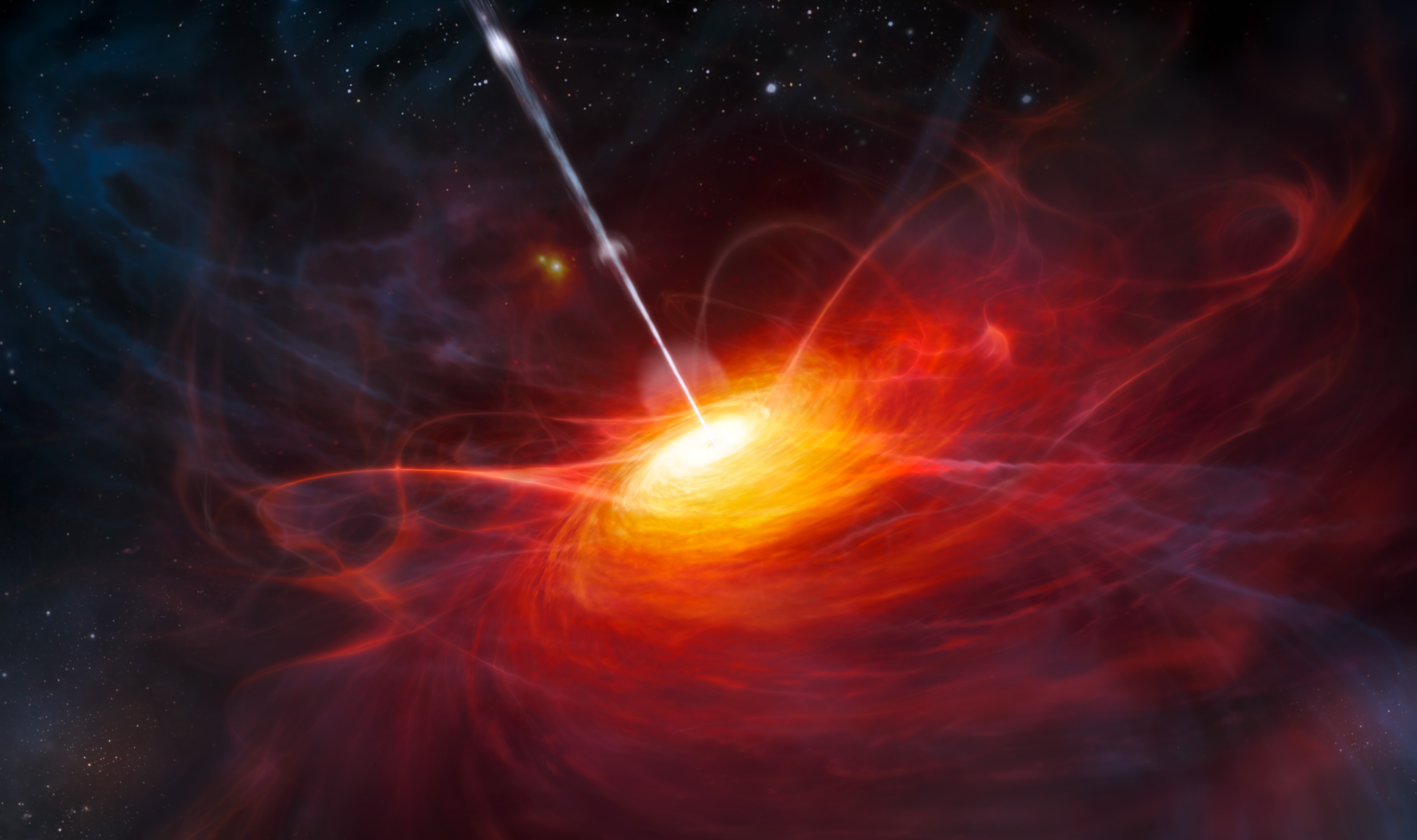
This new finding challenges existing theories of structure formation in the early universe and provides insight into the nature of intergalactic space early in the epoch of galaxy formation.
by Katherine Rosenfeld | Jun 29, 2011 | Daily Paper Summaries
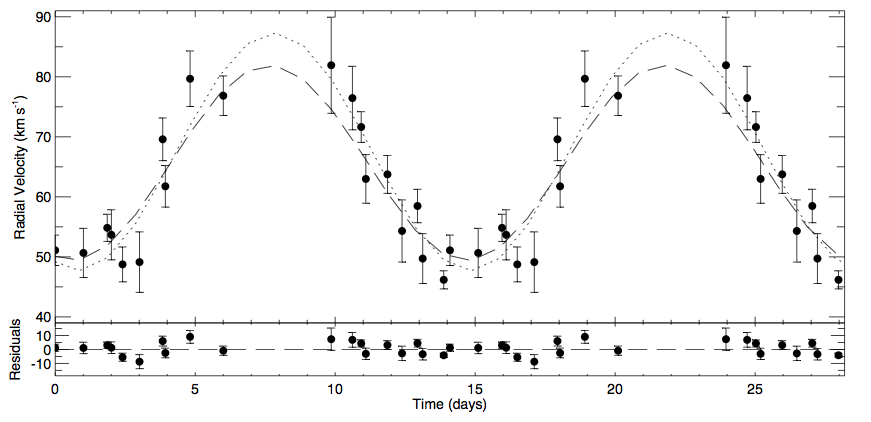
Corroboration and confirmation is the name of this game. Making the same measurement twice — using a different technique — is a powerful way not only to confirm the initial result, but also the method used. This paper confirms a recent detection of a binary system using light-travel time techniques.

by Dan Gifford | Jun 28, 2011 | Daily Paper Summaries, Guides
The word “bias” shows up all the time in astronomy. What exactly does it mean? Also, how a recent study tackles the argument that the M-sigma relation may be biased.
by Nathan Sanders | Jun 27, 2011 | Daily Paper Summaries
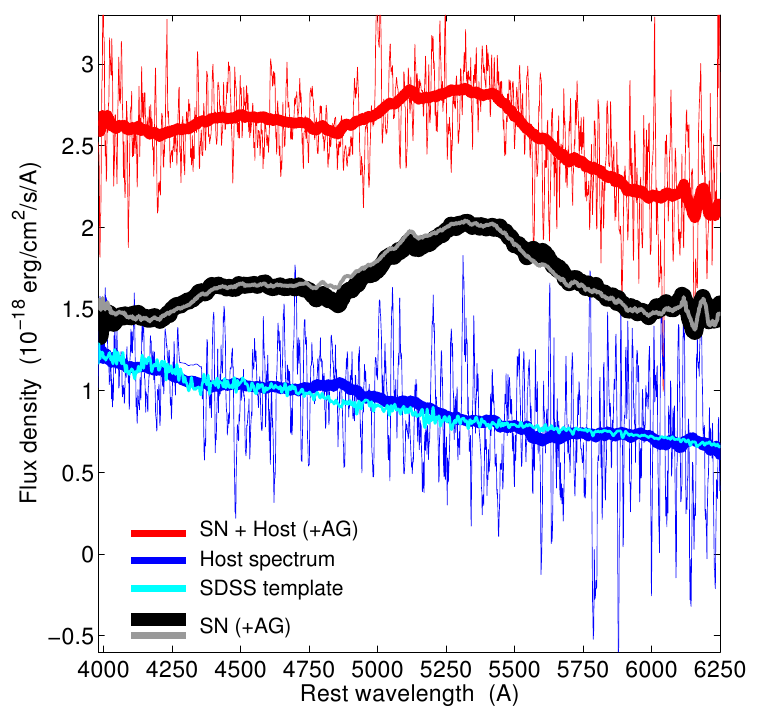
SN 2009nz may be the sixth GRB-supernova ever confirmed spectroscopically.
by Nathan Goldbaum | Jun 25, 2011 | Daily Paper Summaries
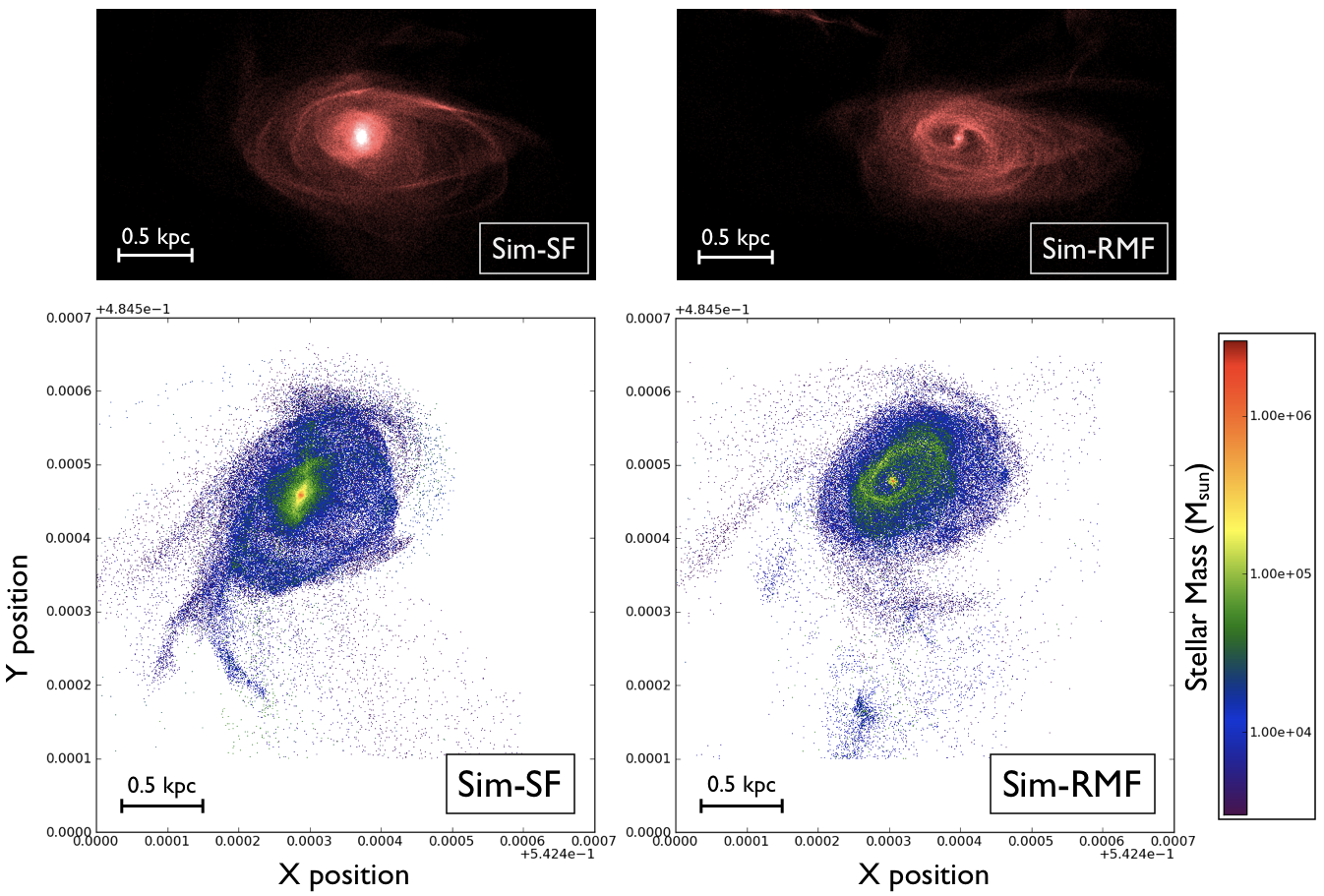
Title: Galaxy Formation with Self-consistently Modeled Stars and Massive Black Holes. I: Feedback-regulated Star Formation and Black Hole Growth Authors: Ji-Hoon Kim, John H. Wise, Marcelo A. Alvarez, Tom Abel First Author’s Institution: Kavli Institute for Particle Astrophysics and Cosmology; Stanford UniversityIn previous astrobites posts, we’ve talked about how black holes eat gas and the relationship between black hole growth and galaxy evolution. We know that galaxies and black holes grow during their evolution and that something must couple the growth of galaxies and black holes to produce the observed M-σ relation between the mass of supermassive black holes and the typical velocities in galactic bulges. Today, we’ll discuss a new attempt to understand the coupled growth of galaxies and supermassive black holes by directly simulating the growth of a high redshift disk galaxy and its central black hole.Using the cosmological hydrodynamics code enzo, the authors have come up with novel prescriptions for simulating the birth of stars and the feedback of black holes. In this simulation, molecular clouds form when gas cools and collapses. Molecular clouds in turn slowly convert a small fraction of their mass into stars, which can then explode in supernovae, supplying kinetic energy for turbulent gas motions. This is in contrast with previous simulations where gas is converted directly into stars and is more consistent with observations of star formation in the Milky Way and nearby galaxies.The black hole can ionize, heat, and exert forces on the gas in its surroundings via both radiation pressure and by ejecting a collimated jet. This is also a significant improvement compared to previous work in which only thermal feedback was included by dumping an...

by Katherine Rosenfeld | Jun 24, 2011 | Daily Paper Summaries
Some astrophysicists must work in space – or as close as they can get – to accomplish their research. This paper discusses an experiment studying how dust can stick together and form planetesimals.
