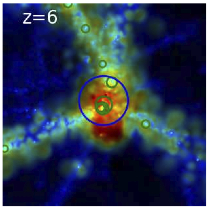
Cold Flows and the First Quasars
Using a new simulation called MassiveBlack, the authors of today’s astrobite manage to grow black holes massive enough (and quickly enough) to be consistent with the recently discovered z ~ 7 quasar.

Using a new simulation called MassiveBlack, the authors of today’s astrobite manage to grow black holes massive enough (and quickly enough) to be consistent with the recently discovered z ~ 7 quasar.
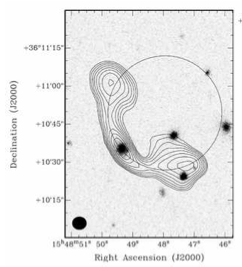
Freeland & Wilcots (2011) present observations of seven “double bent” radio galaxies which they use to measure the density of the intergalactic medium in galaxy groups. They use these observations to draw conclusions about the disruption of dwarf galaxies and the baryon content of these groups.
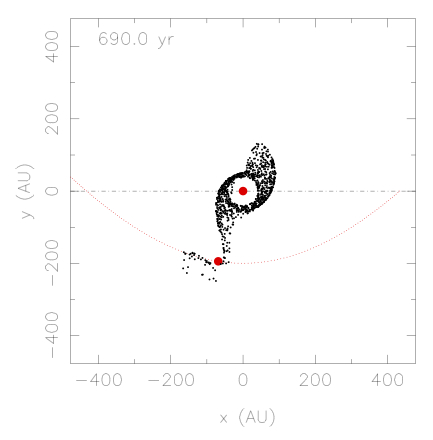
Using a combination of numerical and analytic techniques, the authors of this paper try to answer the question: what does a passing star do to a debris disk?
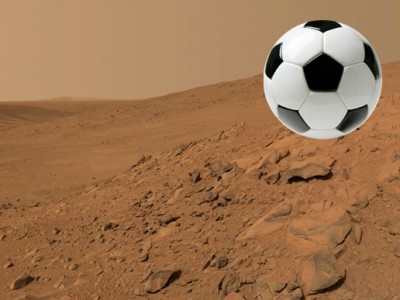
Ever wonder how the game of football would change on Mars? These undergrads at University of Leicester did! Here’s a summary of their thoughts, and a discussion of what this can teach us about being scientists.
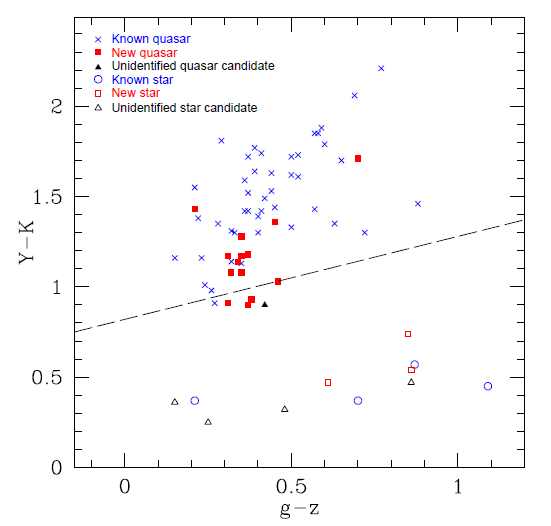
What happens when redshifted quasars masquerade as stars? How do astronomers isolate them from the stellar population?
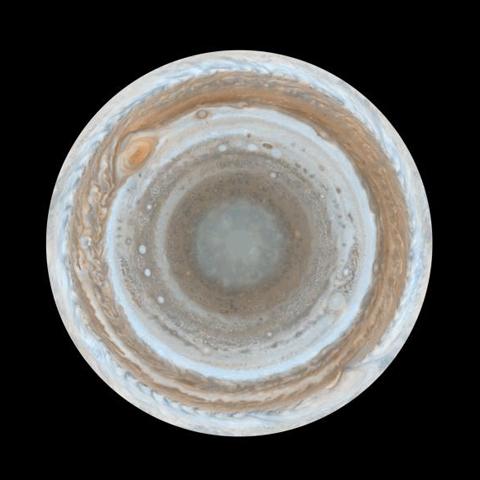
In this paper, techniques from helioseismology – using waves to learn about the interior of the Sun – are applied to yet another object: Jupiter. Because Jupiter is largely a fluid, like the Sun, astronomers have expected it to show global seismic behavior since the mid-1970s; the signal was even theorized to be about the same magnitude as solar oscillations. However, attempts to detect Jupiter’s global oscillations in the 80s and 90s were largely unsuccessful.