by Michael Küffmeier | Jun 23, 2015 | Daily Paper Summaries
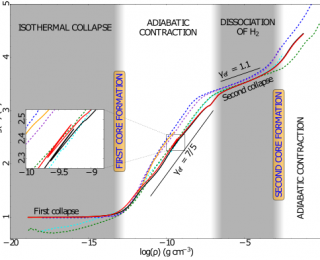
The process of star formation is exciting. During the early phases, a protostar undergoes two characteristic collapses. Today’s Astrobite explains the two collapse phases and briefly discusses their effects on the “final” product: the second core.
by Michael Küffmeier | May 26, 2015 | Daily Paper Summaries
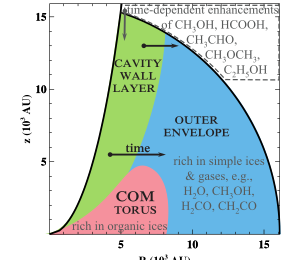
Advanced observational tools such as ALMA allow the detection of complex organic molecules – the building blocks of life. However, how and where they are formed is still unknown.
by Tim Lichtenberg | May 1, 2015 | Daily Paper Summaries
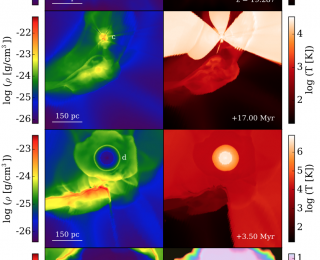
Stars formed in the early Universe were extremely massive and extremely low in elements heavier than helium. The transition from the first to the second generation of stars is still hidden in the shadows of the past. However, simulations of the most massive supernovae can help us to decipher the way of how the life cycle of stars came into being.
by Caroline Huang | Apr 13, 2015 | Daily Paper Summaries
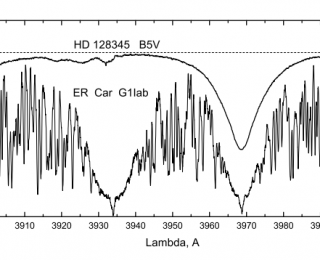
Cepheids are bright enough that we can use them to measure distances to other galaxies, but their luminosities also makes detecting their companions particularly difficult. So how do astronomers find their uncover their secret partners? Today’s paper takes a look…

by Michael Küffmeier | Apr 3, 2015 | Classics, Daily Paper Summaries
Planets seem to occur all over the place in the universe. However, it is still unknown how they form. The growth of objects larger than meter size is difficult because objects of this size quickly fall into the central star. This Astrobite gives a small overview of the meter-size barrier as found by Stuart J. Weidenschilling in 1977.
by Ashley Villar | Feb 10, 2015 | Daily Paper Summaries
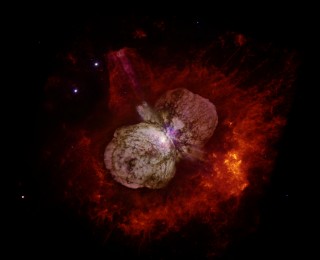
SN1997bs has been labelled an impostor for years, but could it be the real deal?
