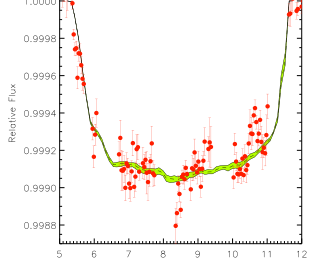
Using observations from home to improve the transit method
Most exoplanets are and have been detected by the transit method. Maybe, we can improve the method even further by drawing conclusions from the recent Venus transits in 2004 and 2012.

Most exoplanets are and have been detected by the transit method. Maybe, we can improve the method even further by drawing conclusions from the recent Venus transits in 2004 and 2012.

Magnetic fields are a crucial part of star formation. Read on whether and how the magnetic field strength dissipates during the early collapsing phase.
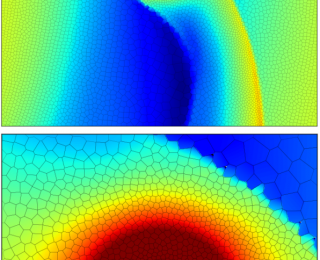
Only the combined effort of observational and theoretical methods can really bring us to a more thorough understanding of the Universe throughout all spatial scales. The authors of today’s paper use and adapt the moving-mesh fluid mechanics code AREPO to function with protoplanetary disks and test its imprint on the potential of planets to open up gaps in the surrounding gas.
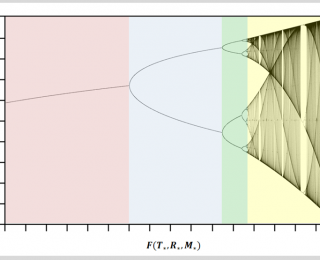
On Earth, the chaotic nature of weather leads to the famous “butterfly effect”, in which the flapping of a butterfly’s wings can theoretically create a hurricane. Chaos is a fundamental element of nature which can arise in many environments–including stars.

Chondrules are among the oldest components of the solar system and give insight in the solar system’s earliest phase. But how are they formed? In shocks? That seems to be at least difficult.
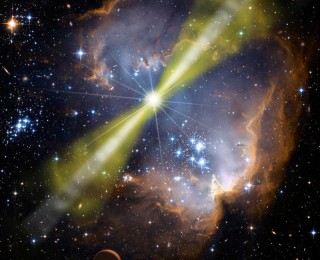
Some GRB-SNe pairs show interesting correlations across their light curves.