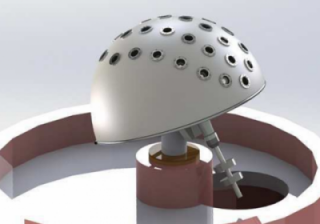
Evryscope, Greek for “wide-seeing”
Everyscope: Opening a new window into time-resolved astronomy.

Everyscope: Opening a new window into time-resolved astronomy.
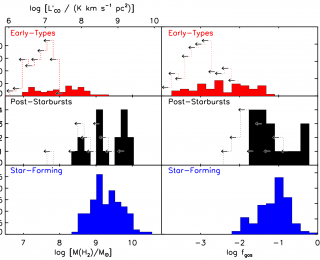
What makes galaxies stop forming stars? Is gas removed entirely, or simply heated to prevent stars from forming? Today’s paper uses observations of carbon monoxide in post-starburst galaxies to try to answer this question.
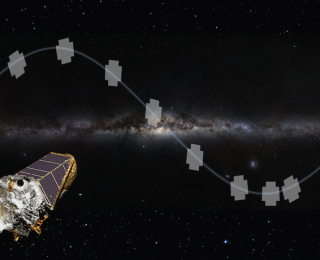
The Kepler Space Telescope was the workhorse of exoplanet discovery until its second reaction wheel failed, rendering it incapable of continuing its original mission. Now, Kepler is back in the game of planet hunting.
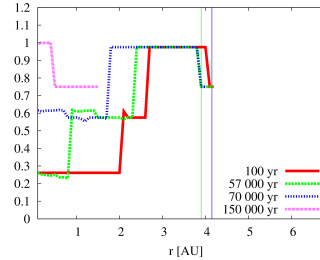
The recent discoveries of alien worlds seemingly rich in carbon reveal a lot of diverse information about the history and further evolutionary paths of exoplanets. However, a correct physical understanding of the investigated systems is crucial for getting the most out of incoming data and is an area of very active research. Therefore, the theoretical modeling of exoplanetary systems must be advanced to a state which includes the long-term evolution of the distribution of detectable molecular species in the planet forming environment.
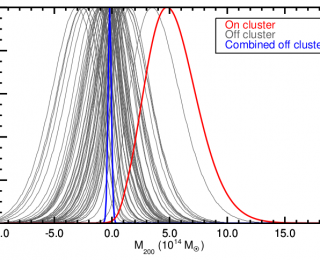
Measuring CMB distortions caused by gravitational lensing is a unique way of estimating galaxy cluster masses.
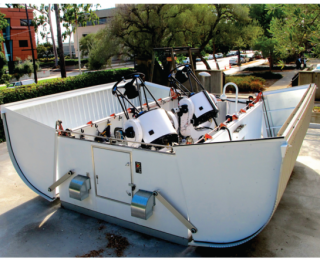
MINERVA: Detecting Super-Earths from the ground in a modular, cost-effective manner.