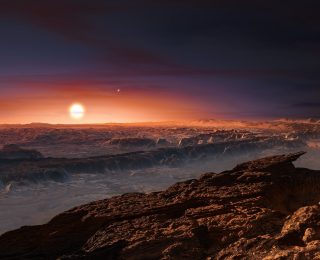
by Leonardo dos Santos | Nov 3, 2016 | Daily Paper Summaries
M-dwarf stars pose as the current favorite target for exoplanet hunters to look for habitable planets. The simulations reported by today’s article, however, show that many of these planets should be expected to be extremely water-rich, and maybe uninhabitable. But it all dependes on how the systems evolve.
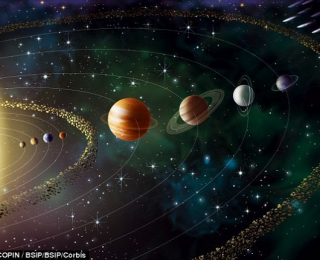
by Tim Lichtenberg | Nov 1, 2016 | Daily Paper Summaries
The puzzling architecture of the Solar system has long been a headache for planetary dynamicists. An alternative model of the gas giants’ movements may shed new light on the issue.
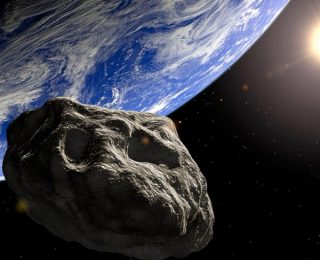
by Michael Küffmeier | Oct 31, 2016 | Daily Paper Summaries
It is commonly believed that Earth and meteorites reveal substantial differences. Today’s authors challenge this view based on their laboratory experiments.
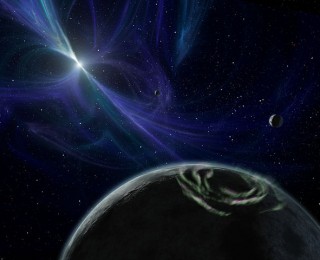
by Joseph Schmitt | Oct 5, 2016 | Daily Paper Summaries
Pulsar planets were the first planets outside the solar system ever discovered, but they now appear to be very rare. What makes a pulsar planet so uncommon?
by Natasha Batalha | Sep 28, 2016 | Daily Paper Summaries
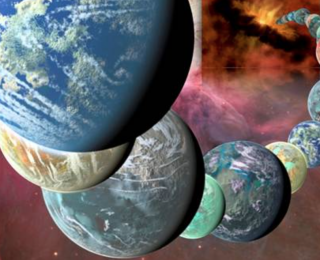
The authors of today’s astrobite try and assess how much knowledge you can actually gain about the first four Harry Potter books by only watching the fourth movie. In other words, what can you learn about planet formation by looking at observations of exoplanets?
by Michael Hammer | Sep 19, 2016 | Daily Paper Summaries
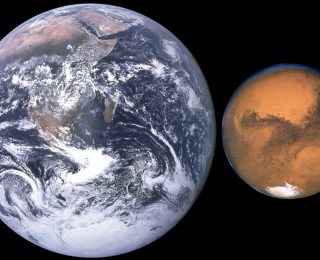
J’onn J’onzz needs astronomers’ help figuring out why his home planet of Mars is smaller (and hence, less habitable) than the Earth. He already asked the rest of the Justice League, but they could not solve the problem. Can Drążkowska et al. save the day?
