by Kerrin Hensley | Jul 28, 2017 | Daily Paper Summaries
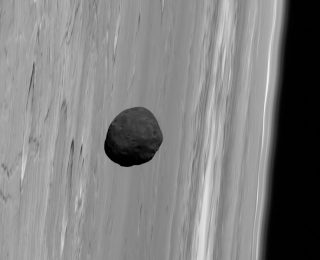
The tiny Martian moons Phobos and Deimos were initially thought to be captured asteroids. Now, it looks like they might be remnants of a collision 4.3 billion years ago. Can simulations help us figure out what they’re made of?
by Kerrin Hensley | Apr 10, 2017 | Daily Paper Summaries
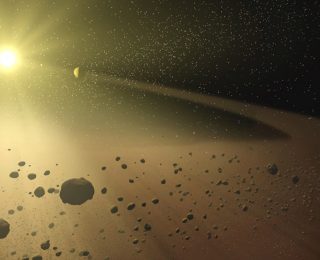
Interstellar space should be littered with debris ejected during the formation of planetary systems—but how much? Engelhardt et al. use solar system surveys and simulations to place an upper limit on the number density of asteroids and comets roaming the Milky Way without a parent star.
by Jamila Pegues | Apr 5, 2017 | Daily Paper Summaries
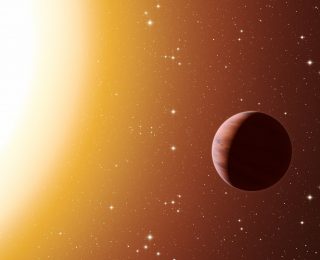
Techniques in astrostatistics help astronomers characterize large amounts of data. The authors of today’s astrobite use data-driven astrostatistics to distinguish between populations of hot Jupiters in a sample. It’s a technique that can definitely be put to good use over the next few decades, as oodles of observations pour in from the new telescopes of the 21st century.
by Jamila Pegues | Mar 6, 2017 | Daily Paper Summaries
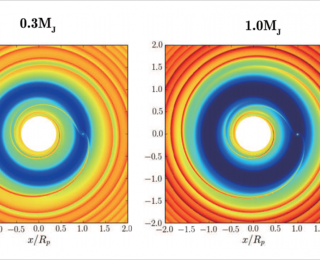
Characterizing planets through direct imaging is no easy task! But today’s authors offer a work-around formula, which estimates the crucial parameter of planetary mass from protoplanetary disk observations. In this astrobite, we discuss ‘The Theory’ and ‘The Practice’ of their cool equation.
by Elisabeth Matthews | Feb 14, 2017 | Daily Paper Summaries
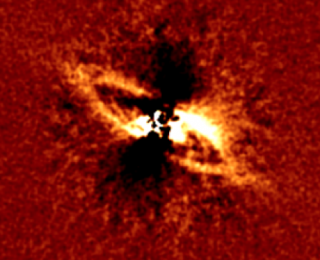
In this bite, we talk about observations of substructure in a young circumstellar debris disk. What can the formation of multiple debris dust rings tell us?
by Elisabeth Matthews | Dec 29, 2016 | Daily Paper Summaries
Today we look at a polluted white dwarf in a binary system: by calculating how many sperm whales accrete onto the white dwarf each second, can we say anything about planet formation?
