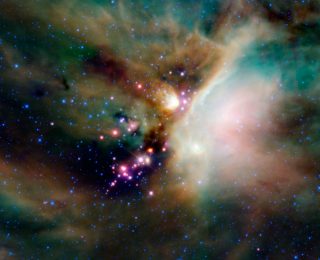
Stellar Pentuplets!
Five young stars in one system — all the same age but at different stages of their evolution. What can they tell us?

Five young stars in one system — all the same age but at different stages of their evolution. What can they tell us?
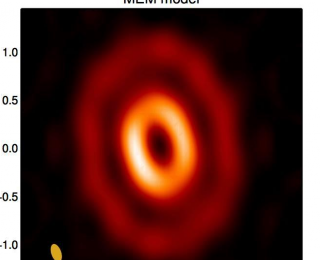
Observing protoplanetary disks with ALMA yields astonishing information about structures in disks. Today’s astrobite presents and discusses a thrilling disk with an inner dust cavity, as well as gaps and rings. Moreover the gaseous disk extends to much larger radii in gas than the dusty disk and may possibly be evidence for radial drift and effects of planet formation.
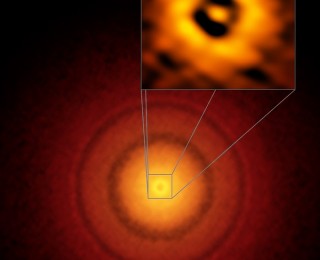
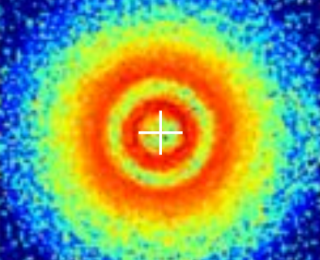
The image of the protoplanetary disk around HL Tau illustrating ring structures triggered a huge “WOW!”. Read on and get convinced by recent observations of TW Hya that ring structures seem to be rule rather than the exception.
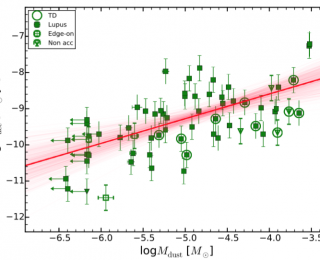
Do predictions from classical disk theory work with state-of-the-art measurements?
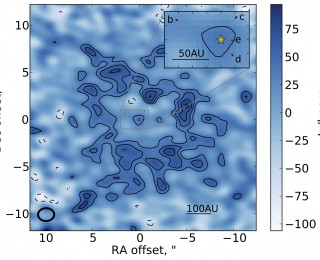
The authors of today’s paper wanted to use the best available instruments to image HR 8799’s outer debris disk, and look for whether “planet b” appears to have cleared out the disk, in the same way Neptune did for the Kuiper Belt.
Baby planets still living in their natal disks don’t want astronomers to find and take pictures of them. But that doesn’t mean we can’t try!