by Kerrin Hensley | Apr 10, 2017 | Daily Paper Summaries
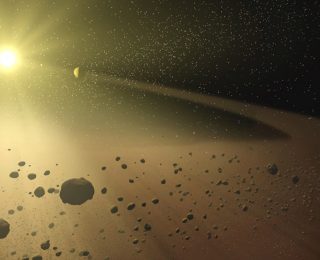
Interstellar space should be littered with debris ejected during the formation of planetary systems—but how much? Engelhardt et al. use solar system surveys and simulations to place an upper limit on the number density of asteroids and comets roaming the Milky Way without a parent star.
by Jamila Pegues | Mar 6, 2017 | Daily Paper Summaries
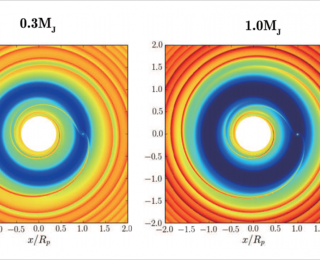
Characterizing planets through direct imaging is no easy task! But today’s authors offer a work-around formula, which estimates the crucial parameter of planetary mass from protoplanetary disk observations. In this astrobite, we discuss ‘The Theory’ and ‘The Practice’ of their cool equation.
by Elisabeth Matthews | Feb 14, 2017 | Daily Paper Summaries
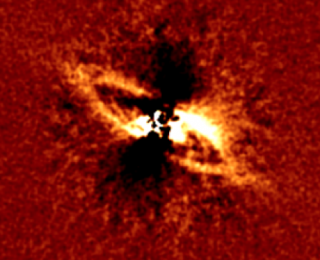
In this bite, we talk about observations of substructure in a young circumstellar debris disk. What can the formation of multiple debris dust rings tell us?
by Michael Hammer | Dec 26, 2016 | Daily Paper Summaries
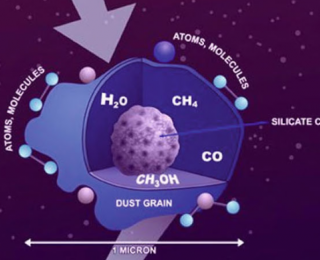
I received a giant planet for Christmas! Where did it come from? At what distance from its star did it form? I try to use the planet’s atmospheric composition to answer those questions, but Piso et al. point out this method may not be as straightforward as I would imagine.
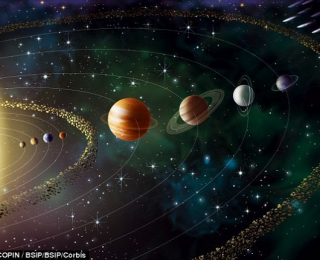
by Tim Lichtenberg | Nov 1, 2016 | Daily Paper Summaries
The puzzling architecture of the Solar system has long been a headache for planetary dynamicists. An alternative model of the gas giants’ movements may shed new light on the issue.
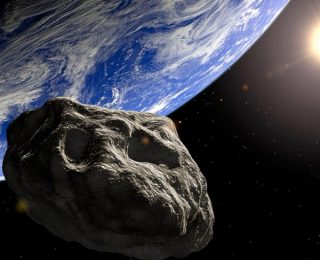
by Michael Küffmeier | Oct 31, 2016 | Daily Paper Summaries
It is commonly believed that Earth and meteorites reveal substantial differences. Today’s authors challenge this view based on their laboratory experiments.
