by Michael Küffmeier | Jan 27, 2016 | Daily Paper Summaries
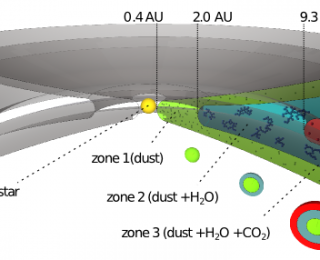
Planets are km-size bodies, but it is particularly puzzling how solid grains have grown to sizes beyond cm to m. Water ices can improve the sticking of such grains, but does this imply that ices from other molecules improve the sticking as well?
by Jesse Feddersen | Jan 12, 2016 | Daily Paper Summaries
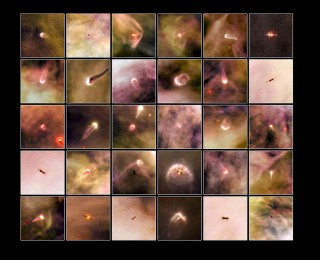
Sherlocks Holmes investigates the scene of a crime for clues about whodunit. Today’s paper investigates the massacre of circumstellar disks in a star cluster for clues about the cluster itself.
by Gudmundur Stefansson | Dec 22, 2015 | Current Events, Daily Paper Summaries
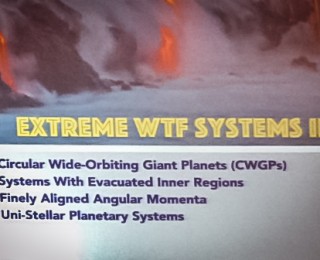
The third Extreme Solar System conference was held between Nov 29 to Dec 4th, in Kona, Hawaii, on the 20th anniversary of the first exoplanet detection around a main sequence star. This astrobite gives a brief overview of the conference.
by Michael Küffmeier | Nov 4, 2015 | Daily Paper Summaries
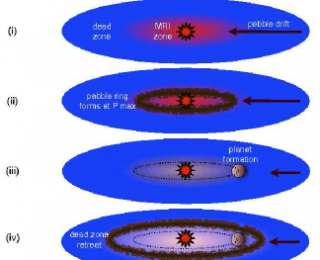
Planets with radii between Earth and Neptune and small radii are the most common in planetary systems. These planets are challenging to explain with classical models of planets. Do planets form instead in-situ in an inside-out manner?
by Tim Lichtenberg | Nov 2, 2015 | Daily Paper Summaries
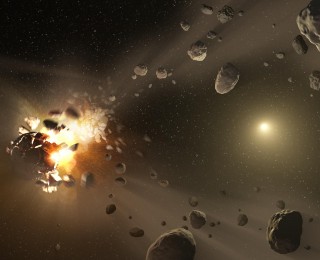
Earth’s composition seemingly does not fit into planet formation theory. Ripping apart its building blocks by collisions during accretion might sound violent, but can be a way to go.
by Tim Lichtenberg | Sep 15, 2015 | Daily Paper Summaries
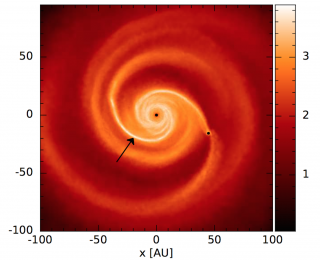
How to form clumps in the intermediate ranges of massive protoplanetary disks? Could these later be planets?
