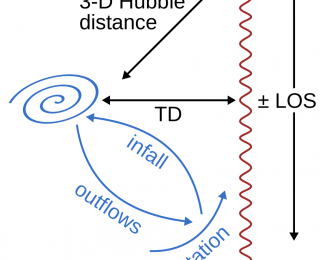
It’s a gas gas gas: understanding gas motions surrounding galaxies
Background quasars allow us to probe the relationship between a galaxy and its gas. Today’s paper uses simulations to model such observations.

Background quasars allow us to probe the relationship between a galaxy and its gas. Today’s paper uses simulations to model such observations.
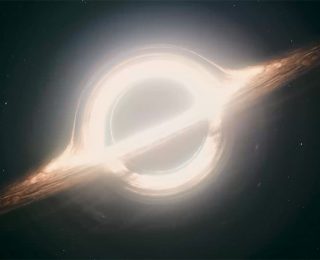
Materials carousel round and round black holes in the form of accretion disks, which evidence suggests to be larger than theoretical estimate. (Image credit: Double Negative visual effects company)
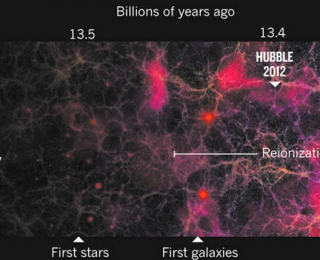
Cosmic reionization is a period in the Universe history when it switched from being predominantly neutral to mostly ionized. We still haven’t quite pinned down the source(s) that caused this transition, but we have our suspicions. It could be quasars. It could be galaxies. Or could it be something else?
[Figure from universe-review.ca/F05-galaxy06.htm]
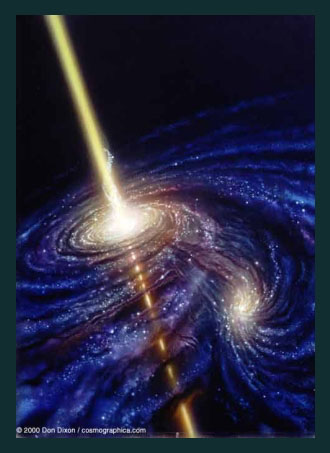
In this paper, the authors describe a new class of quasar which pushes the boundaries of our current understanding of black hole physiology.
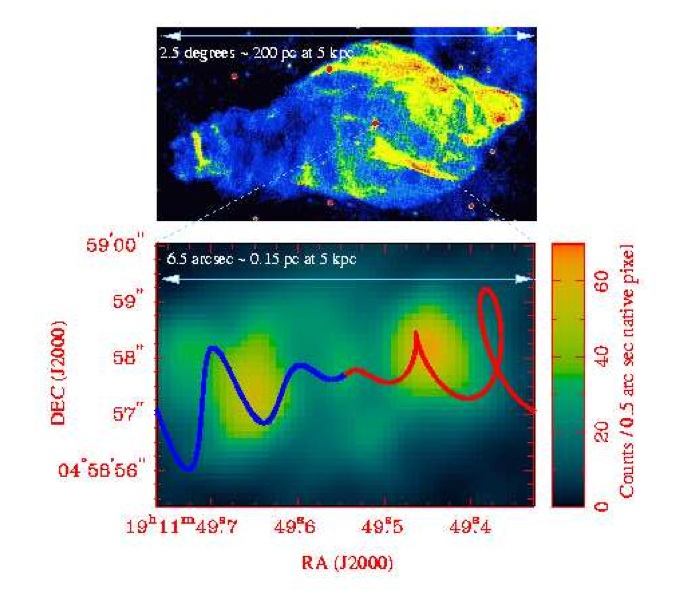
The interaction of jets from SS433 with the supernova remnant W50 should create a very different nebula shape than what we observe. Could changes in SS433’s past be the cause of this?