by Evan Schneider | Jul 13, 2011 | Daily Paper Summaries
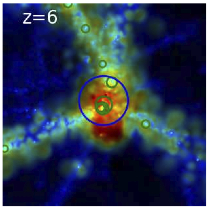
Using a new simulation called MassiveBlack, the authors of today’s astrobite manage to grow black holes massive enough (and quickly enough) to be consistent with the recently discovered z ~ 7 quasar.
by Evan Schneider | Jul 8, 2011 | Daily Paper Summaries
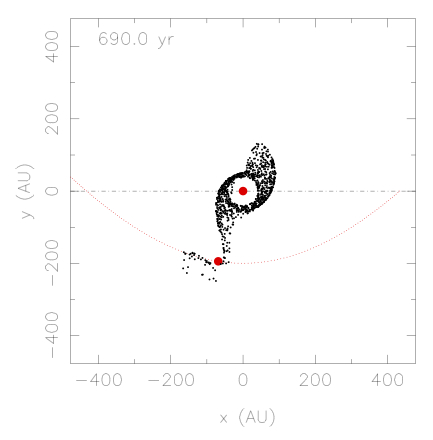
Using a combination of numerical and analytic techniques, the authors of this paper try to answer the question: what does a passing star do to a debris disk?
by Nathan Goldbaum | Jun 25, 2011 | Daily Paper Summaries
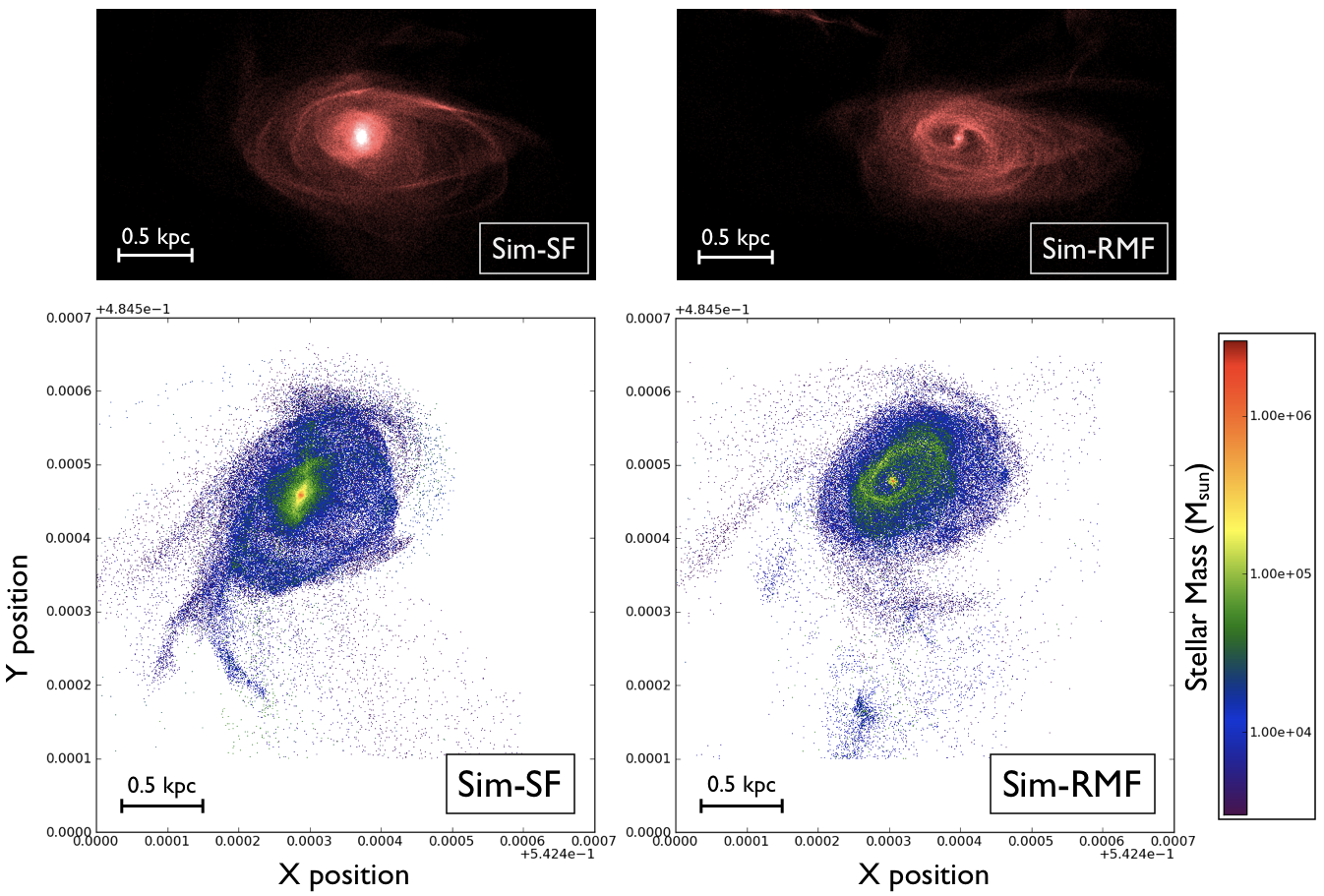
Title: Galaxy Formation with Self-consistently Modeled Stars and Massive Black Holes. I: Feedback-regulated Star Formation and Black Hole Growth Authors: Ji-Hoon Kim, John H. Wise, Marcelo A. Alvarez, Tom Abel First Author’s Institution: Kavli Institute for Particle Astrophysics and Cosmology; Stanford UniversityIn previous astrobites posts, we’ve talked about how black holes eat gas and the relationship between black hole growth and galaxy evolution. We know that galaxies and black holes grow during their evolution and that something must couple the growth of galaxies and black holes to produce the observed M-σ relation between the mass of supermassive black holes and the typical velocities in galactic bulges. Today, we’ll discuss a new attempt to understand the coupled growth of galaxies and supermassive black holes by directly simulating the growth of a high redshift disk galaxy and its central black hole.Using the cosmological hydrodynamics code enzo, the authors have come up with novel prescriptions for simulating the birth of stars and the feedback of black holes. In this simulation, molecular clouds form when gas cools and collapses. Molecular clouds in turn slowly convert a small fraction of their mass into stars, which can then explode in supernovae, supplying kinetic energy for turbulent gas motions. This is in contrast with previous simulations where gas is converted directly into stars and is more consistent with observations of star formation in the Milky Way and nearby galaxies.The black hole can ionize, heat, and exert forces on the gas in its surroundings via both radiation pressure and by ejecting a collimated jet. This is also a significant improvement compared to previous work in which only thermal feedback was included by dumping an...

by Courtney Dressing | Jun 16, 2011 | Daily Paper Summaries
Habitable exomoons appear all over science fiction, but could they exist in real life? Could we detect them if they did?
by Dan Gifford | May 31, 2011 | Daily Paper Summaries
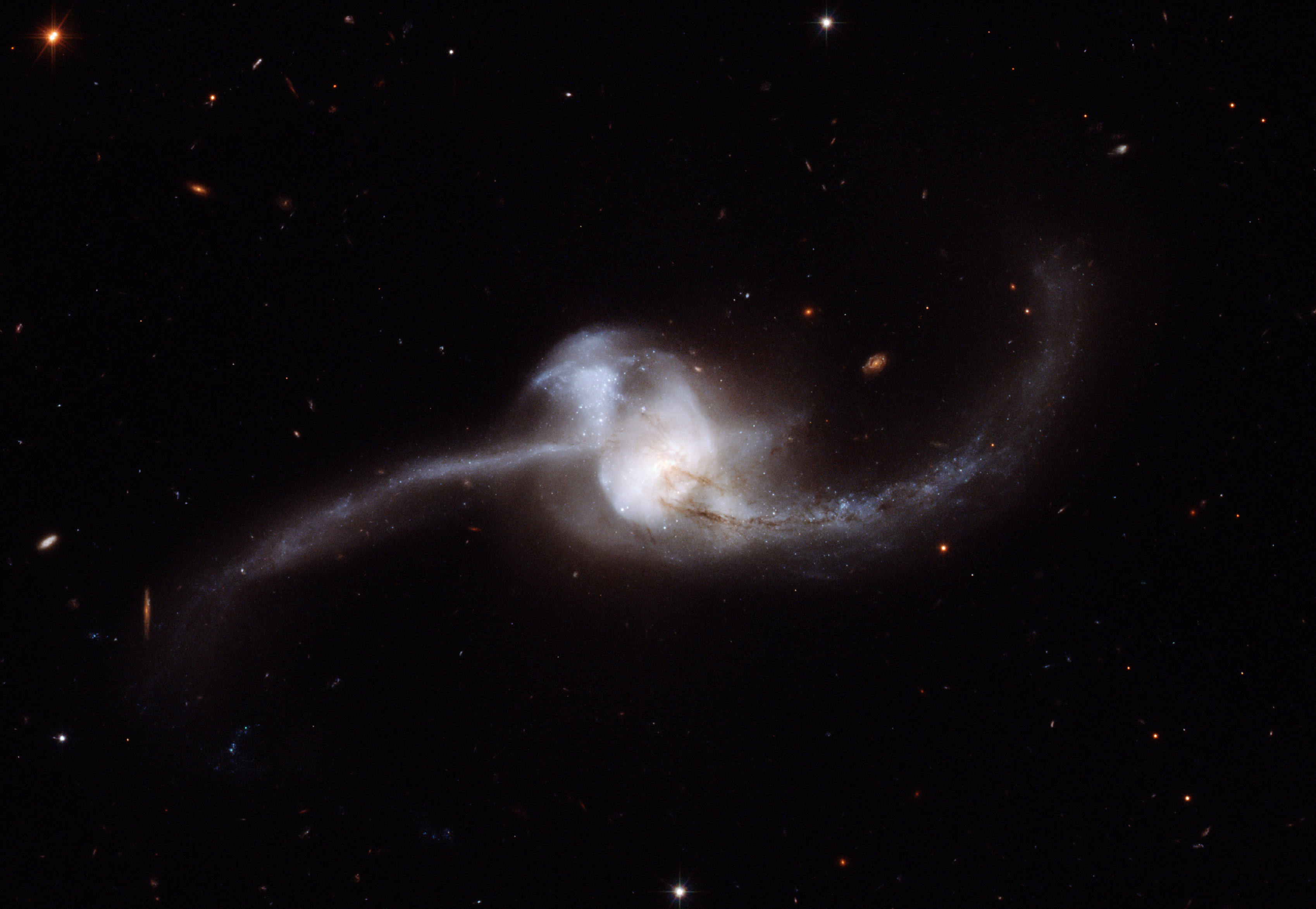
Wouldn’t it be cool is the super-massive black hole at the center of a huge galaxy was somehow related to the entire dark matter halo surrounding the system? Turns out it just might be.
by Dan Gifford | May 17, 2011 | Daily Paper Summaries
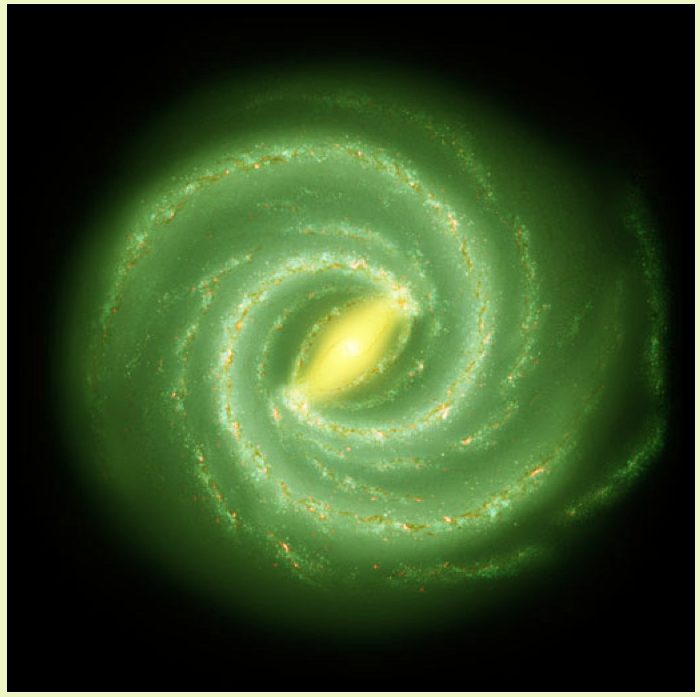
Our Milky Way seems to be passively evolving towards the red sequence… very efficiently!
