• RSS
  • Submit a Guest Post
  • Undergraduates: Submit your Research!
  • Suggest a Paper Topic!
astrobites
  • About
    • About Astrobites
    • Meet the Authors
    • Statement of Inclusivity
    • Copyright & Permissions
  • Latest Research
    • Daily Paper Summaries
    • Classics
    • Undergrad Research
    • Physical Review Coverage
  • Beyond astro-ph
    • Beyond astro-ph Library
    • Interviews
    • Career Navigation
    • Personal Experiences
    • Current Events
    • Teaching with Astrobites
  • Guides
    • EM Spectrum
    • Galaxies & AGNs
    • Spectroscopy and Spectral Lines
    • Adaptive Optics
    • Gravitational Waves
    • Transient Astronomy
    • Astrophysical Software
    • Graduate School
    • Writing a personal statement for grad apps
    • First Observing Run
    • …More Guides!
Select Page
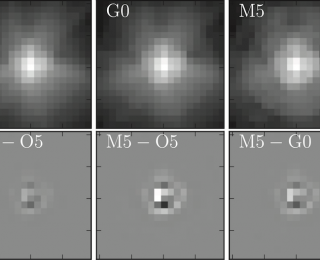
Teaching Stellar Classification to Computers

Teaching Stellar Classification to Computers

by Philipp Plewa | Mar 2, 2017 | Daily Paper Summaries

How an artificial neural network can be trained to classify stars into spectral types, using only a single broad-band image.
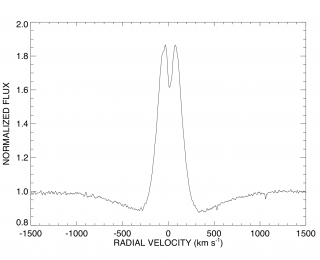
A Binary Companion to a Be Star

A Binary Companion to a Be Star

by Matthew Green | Feb 6, 2017 | Daily Paper Summaries

A star that spins fast enough to throw off its atmosphere, and a hint at how it got that way.
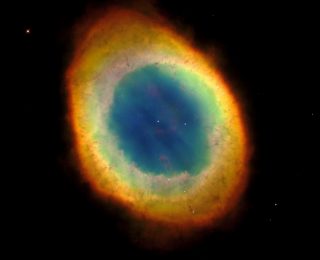
The Curious Case of Planetary Nebulae in Globular Clusters

The Curious Case of Planetary Nebulae in Globular Clusters

by Kerrin Hensley | Jan 23, 2017 | Daily Paper Summaries

Planetary nebulae where they shouldn’t be–how did they get there?
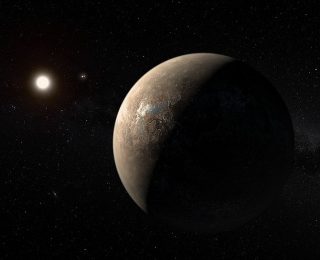
Settling the Proxima Centauri Question

Settling the Proxima Centauri Question

by Matthew Green | Nov 16, 2016 | Daily Paper Summaries

Are Proxima Centauri and Alpha Centauri part of the same system?

Evolution in the Stellar Nursery

Evolution in the Stellar Nursery

by Mara Johnson-Groh | Oct 14, 2016 | Daily Paper Summaries

Do baby stars like it hot or cold? Learning about the dusty environments where stars are born.

Getting distances from stars that touch

Getting distances from stars that touch

by Caroline Huang | Oct 6, 2016 | Daily Paper Summaries

Contact binaries are stars so close together that they touch…and that might be enough for us to know how far away they are.

« Older Entries
Next Entries »

Loading

Follow our socials

  • Bluesky
  • Facebook
  • Instagram
  • RSS Feed

More Posts About

AAS AGN astronomy astrophysics binary stars black holes cosmology dark matter dwarf galaxies exoplanets galaxies galaxy evolution gravitational waves habitability JWST Kepler Milky Way observations planetary science planet formation protoplanetary disks radio astronomy simulations solar system spectroscopy star formation stars stellar evolution supernovae theory

Posts by Category

  • Accessibility
  • Applications
  • Beyond
  • Book Reviews
  • Career Navigation
  • Classics
  • Climate Change
  • Course Assignments
  • Crossposts
  • Current Events
  • Daily Paper Summaries
  • Game Reviews
  • Guides
  • Historical Astronomy
  • Instrumentation
  • Interviews
  • Outreach
  • Personal Experiences
  • PRJ
  • Quick Notes
  • Satellites
  • Teaching
  • Undergraduate Research

More Astronomy

  • AAS
  • AAS Nova
  • astro-ph
  • AstroBetter
  • APOD

Read Astrobites in Other Languages

  • Astrobitos (Spanish)
  • Astropontos (Portuguese)
  • staryab (Farsi)

Listen to Astrobites

  • astro[sound]bites

Discover More Incredible Science

  • ScienceBites Network
  • RSS

© 2026 Astrobites | All Rights Reserved | Supported by AAS | Designed by Elegant Themes | Powered by WordPress