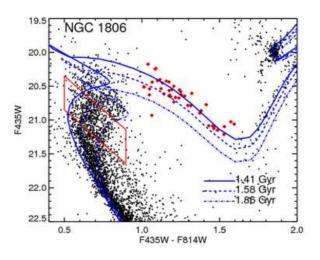
Are There Age Spreads in Intermediate Age Clusters?
Can stellar clusters be host to multiple star formation events? The authors of today’s paper take a closer look…

Can stellar clusters be host to multiple star formation events? The authors of today’s paper take a closer look…
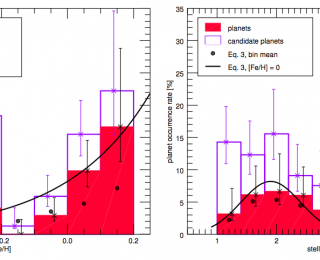
Are more massive stars more likely to have planets? Read on to find out…
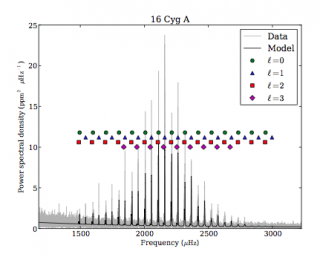
If you didn’t know already, asteroseismology is awesome. Read on to hear why…
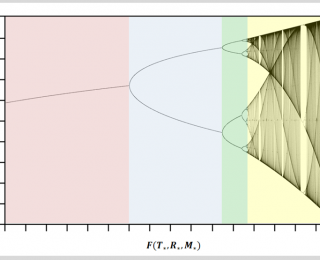
On Earth, the chaotic nature of weather leads to the famous “butterfly effect”, in which the flapping of a butterfly’s wings can theoretically create a hurricane. Chaos is a fundamental element of nature which can arise in many environments–including stars.
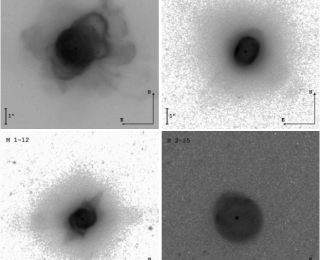
Sometimes, stellar evolution happens on more human timescales—tens to hundreds of years rather than millions or billions.
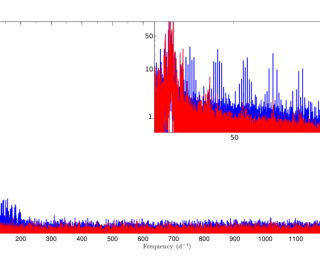
Astronomical data gathered over time has gaps. Even the most reliable space telescopes suffer from occasional pauses in their otherwise constant watchfulness. Why are gaps a problem? Can’t astronomers just analyze the short chunks of data that don’t have gaps? The answer: Fourier transforms.