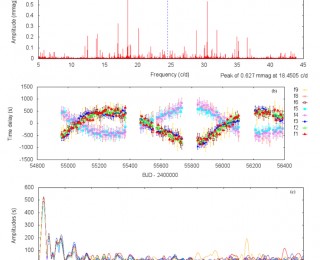
by Meredith Rawls | May 5, 2014 | Daily Paper Summaries
How do pulsating stars give away their secret identities as binary dance partners? In this paper, the authors demonstrate a new way to not only detect binaries we may have missed in the Kepler data, but also to measure their velocities without spectra.
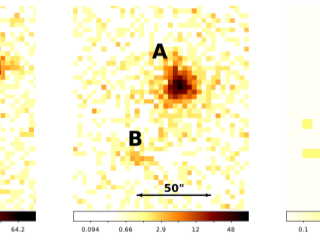
by Anson Lam | Apr 21, 2014 | Daily Paper Summaries
Hot Jupiters offer an interesting mechanism for affecting the rotation and magnetic activity levels of their host stars.
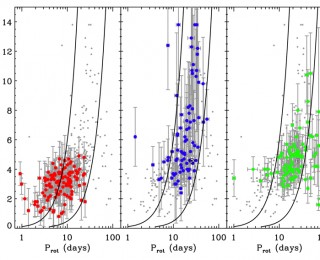
by Meredith Rawls | Apr 8, 2014 | Daily Paper Summaries
We have repeatedly seen how Kepler goes above and beyond its original mission of finding exoplanets. Today’s paper is no exception.
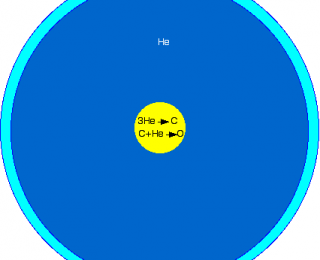
by Meredith Rawls | Mar 11, 2014 | Daily Paper Summaries
Enter the observed oddball: a subdwarf B (sdB) star. These unexpected stars are fusing helium into carbon and oxygen in their core and only have a thin hydrogen envelope. So, where did the hydrogen go?
by Ben Montet | Feb 10, 2014 | Daily Paper Summaries
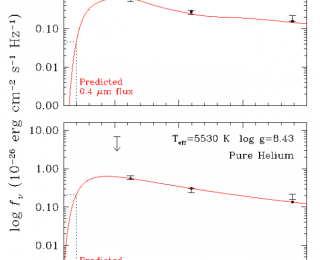
Most binary stars probably formed at the same time, meaning all stars in the same system should have the same age. The authors of this paper analyze a stellar binary system where one star appears to be lying about its age, as one star appears 3 billion years older than its companion.
by Meredith Rawls | Dec 10, 2013 | Daily Paper Summaries
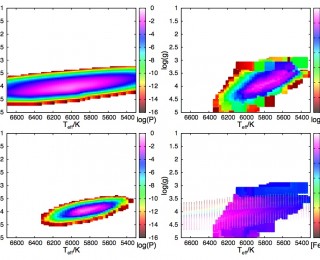
The link between a pile of data and a physical explanation is the fun part. Astronomers spend countless hours gathering data, and countless more thinking up physical models for different pieces of the Universe. But reconciling these two things—finding a model that not only agrees with observations, but is the sole likely explanation—isn’t easy.
