by Ian Czekala | Jun 3, 2011 | Daily Paper Summaries
Stars are essentially element factories: most of the elements which we know (and dearly love, for life’s sake) were produced by some aspect of stellar evolution, either during their long, uneventful tenancy on the main sequence, shorter and swifter time as a red giant branch star, or their catastrophic death as supernovae.

by Elisabeth Newton | May 26, 2011 | Career Navigation, Personal Experiences
Over the past three and a half days, I joined astronomers from all over the world for the 218th meeting of the American Astronomical Society. The AAS holds two major meetings every year, one in the winter and one in the summer. This year’s summer conference in Boston just wrapped up and in this astrobite I’ll report on two of the talks I attended.
by Dan Gifford | May 17, 2011 | Daily Paper Summaries
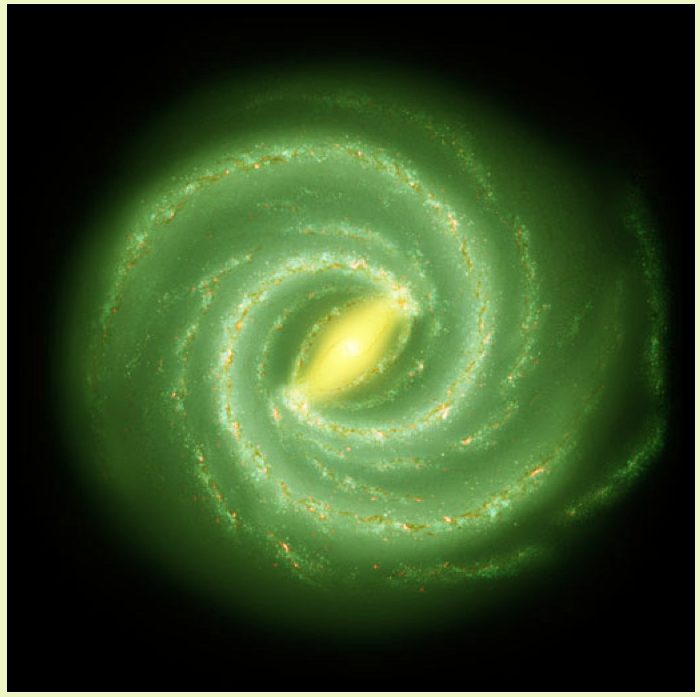
Our Milky Way seems to be passively evolving towards the red sequence… very efficiently!
by Dan Gifford | Apr 5, 2011 | Daily Paper Summaries
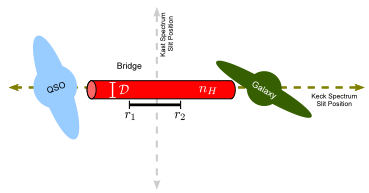
Mergers play an important role in any galaxy’s evolution. A coincidental observation of a quasar and companion galaxy linked by a photoionized gas bridge offers an exclusive look at the merger process at moderate redshift.
by Ian Czekala | Mar 27, 2011 | Daily Paper Summaries
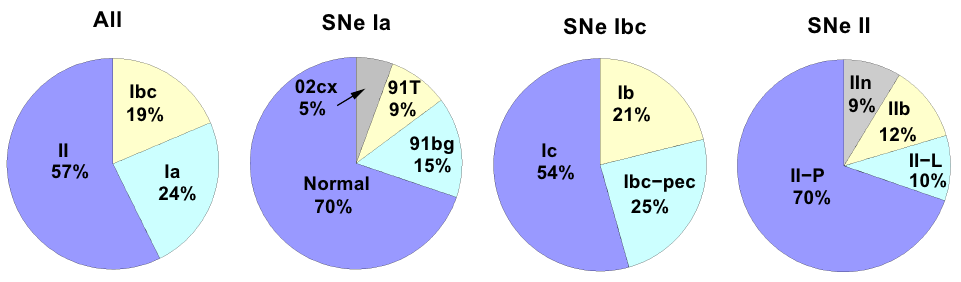
Supernovae, the extremely luminous explosions that are the catastrophic deaths of stars, are used directly and indirectly by astronomers of many disciplines. Cosmologists use type Ia supernovae as powerful “standard candles” to probe the farthest rungs of the cosmic distance ladder. Astrochemists studying the interstellar medium (ISM) track supernovae feedback of heavier elements that enrich the ISM. Astrophysicists working on star formation look for evidence of supernovae-induced collapse of molecular clouds. If supernovae are such ubiquitous tools, then it must be essential to understand the actual supernova (SN) mechanism itself.
by Elisabeth Newton | Feb 24, 2011 | Daily Paper Summaries
Planetary nebulae form during late stages of the evolution of low to intermediate mass stars. In this paper, Guzman-Ramirez et al. explore two possible explanations for the presence of carbon in Galactic Bulge planetary nebulae.
